How Much Should You Spend on Rent in NZ?
Is your rent too high? The 30% rule says most Kiwis are overpaying. Here's what you should actually spend, with NZ city benchmarks.
The short version
- The traditional guideline: spend no more than 30% of your gross income on rent.
- The rule was written on gross, and take-home is the more honest test.
Housing costs are the single biggest expense for most New Zealanders. Getting the rent-to-income ratio right is the foundation of every other financial decision. For a full breakdown of what things cost across NZ cities, see our cost of living guide.
The 30% rule
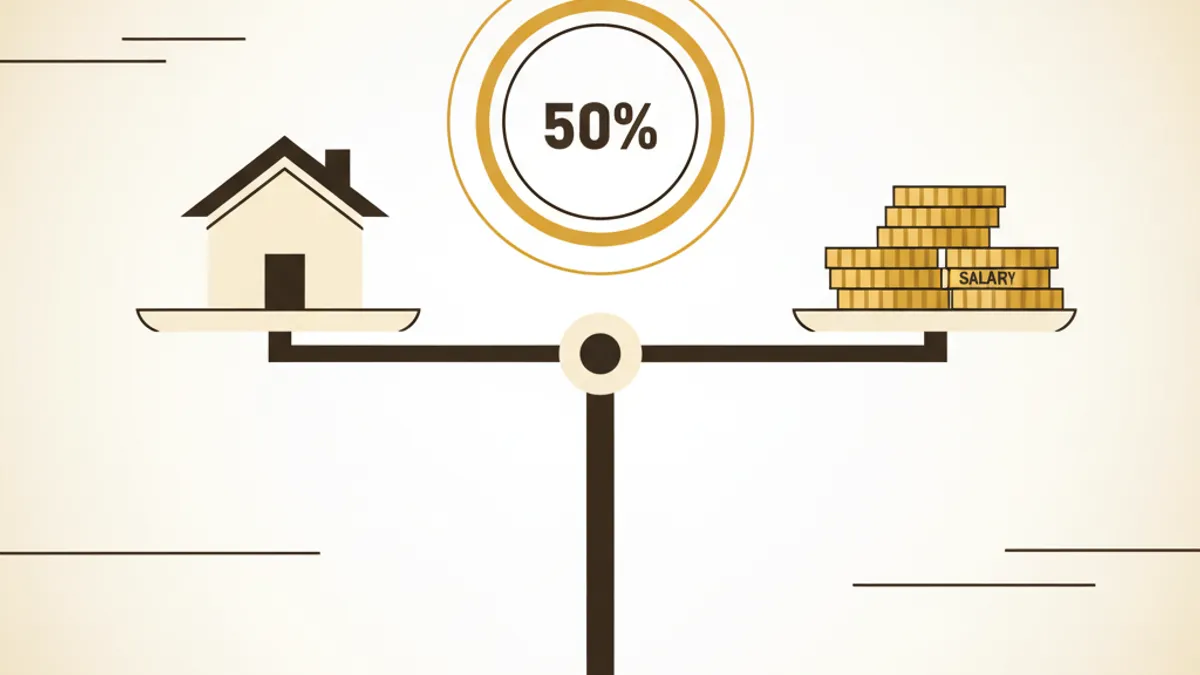
The traditional guideline: spend no more than 30% of your gross income on rent.
For an individual earning $65,000/year:
- Gross weekly: $1,250
- 30% = $375/week rent
For a couple earning $120,000/year combined:
- Gross weekly: $2,308
- 30% = $692/week rent
Does this still work in NZ?
Barely. In Auckland, the median rent for a 2-bedroom is around $550-650/week. In Wellington, $450-550. In Christchurch, $400-480.
For many Kiwis, especially in Auckland, spending 30% on rent means earning well above median income or flatting.
A more realistic approach
The 50/30/20 framework
Instead of fixating on 30%, look at your whole budget using the household budget guide:
- 50% on needs (rent, power, food, transport, insurance)
- 30% on wants (dining out, entertainment, clothes)
- 20% on savings (emergency fund, goals, KiwiSaver above minimum)
If rent takes 35% but you're still saving 15%, that's fine. If rent takes 45% and you're saving nothing, that's a problem.
Steady tip: Steady automatically calculates your spending breakdown. Ask the AI "What percentage of my income goes to rent?" and it'll tell you instantly.
How to reduce housing costs
Flatting
The most effective way to reduce rent. Going from a 1-bed apartment ($450/week) to a room in a flat ($220/week) saves $12,000/year.
Location trade-offs
Moving 20 minutes further out can save $50-100/week in rent. But factor in transport costs, if you're spending $50/week more on petrol, the saving shrinks. (What petrol actually costs in 2026, and how to spend less on it.)
Negotiate
If you've been a good tenant (always on time, property well-maintained), ask for a rent reduction or freeze at renewal time. Landlords would rather keep a good tenant than find a new one.
Red flags
You're spending too much on rent if:
- You're regularly using credit or overdraft for groceries
- You have zero savings and no emergency fund
- You're choosing between rent and other essential bills
- Rent takes more than 40% of your take-home pay
Steady tip: Set your rent as a recurring bill in Steady. The spending page shows exactly what percentage of your income goes to rent each month.
Should the 30% be of gross pay or take-home pay?
The rule was written on gross, and take-home is the more honest test.
Gross is what a landlord or a lender will use, so it is worth knowing. But you pay rent out of what actually lands in your account, and after PAYE, KiwiSaver and a student loan, 30% of gross can be closer to 40% of what you receive.
Run both. Use the gross figure to know what you will be assessed on, and the take-home figure to know whether the week works.
What counts as housing costs besides rent?
More than people budget for, which is why the rent figure alone flatters the decision.
Power and gas, internet, contents insurance, and water where it is separately charged all belong here. So does whatever the place costs you in transport, because a cheaper suburb that adds an hour of driving a day is not as cheap as it looked.
Add them up and compare the total between two places. The gap is often half the size of the rent gap.
How often can my landlord put the rent up?
Once every 12 months, with 60 days written notice, under the Residential Tenancies Act.
The notice has to be in writing and has to state the new amount and the date it starts. An increase inside a fixed-term tenancy is only allowed if the agreement says so.
If an increase arrives early or without proper notice, it is not valid. Tenancy Services will tell you where you stand, free, before you agree to anything.
How much do I need saved before I move into a rental?
Usually four to six weeks of rent, all at once.
A bond of up to four weeks is the standard maximum, and a landlord can ask for up to two weeks rent in advance on top. On $500 a week that is $2,000 to $3,000 due before you have your key.
The part people forget is that your old bond takes weeks to come back. Plan on funding the new place before the old one refunds you.
The bottom line
The "right" amount for rent depends on your income, city, and life stage. Aim for 30% of gross as a guideline, but don't stress if you're at 35% and still saving. The real test: can you cover rent AND still put something away each payday? Track your spending breakdown to find out.

Written by Sam Wilson
Founder, Steady
Sam is a New Zealand founder building Steady, a personal finance app designed for Kiwis, integrated with every major NZ bank via Akahu. He writes about money, bank integrations, and what actually works for everyday New Zealanders.More about Sam
Steady connects your bank and tracks it all automatically, no spreadsheets. Join the waitlist for early access.
Suggested reads
More from the Steady blog

How to Save for Your First Home in NZ (2026 Guide)
NZ house deposit in 2026: you need $120k (or less with these tricks). KiwiSaver withdrawal, what replaced the First Home Grant, and the exact savings plan.

The NZ Student Money Guide (Survive and Thrive on a Budget)
Broke uni student? Not anymore. The complete NZ student money guide, StudyLink hacks, $50/week meal plans, and side hustles that work.
How to Start Budgeting in NZ: Beginner's Guide (2026)
Forget spreadsheets. This 10-minute guide gets you a working budget that actually fits NZ pay cycles, fortnightly or weekly. Free template inside.
Ready to sort your money?
Steady connects to your NZ bank accounts and helps you track spending, set goals, and get AI-powered insights.
Try Steady free