How to Start Budgeting in NZ: Beginner's Guide (2026)
Forget spreadsheets. This 10-minute guide gets you a working budget that actually fits NZ pay cycles, fortnightly or weekly. Free template inside.
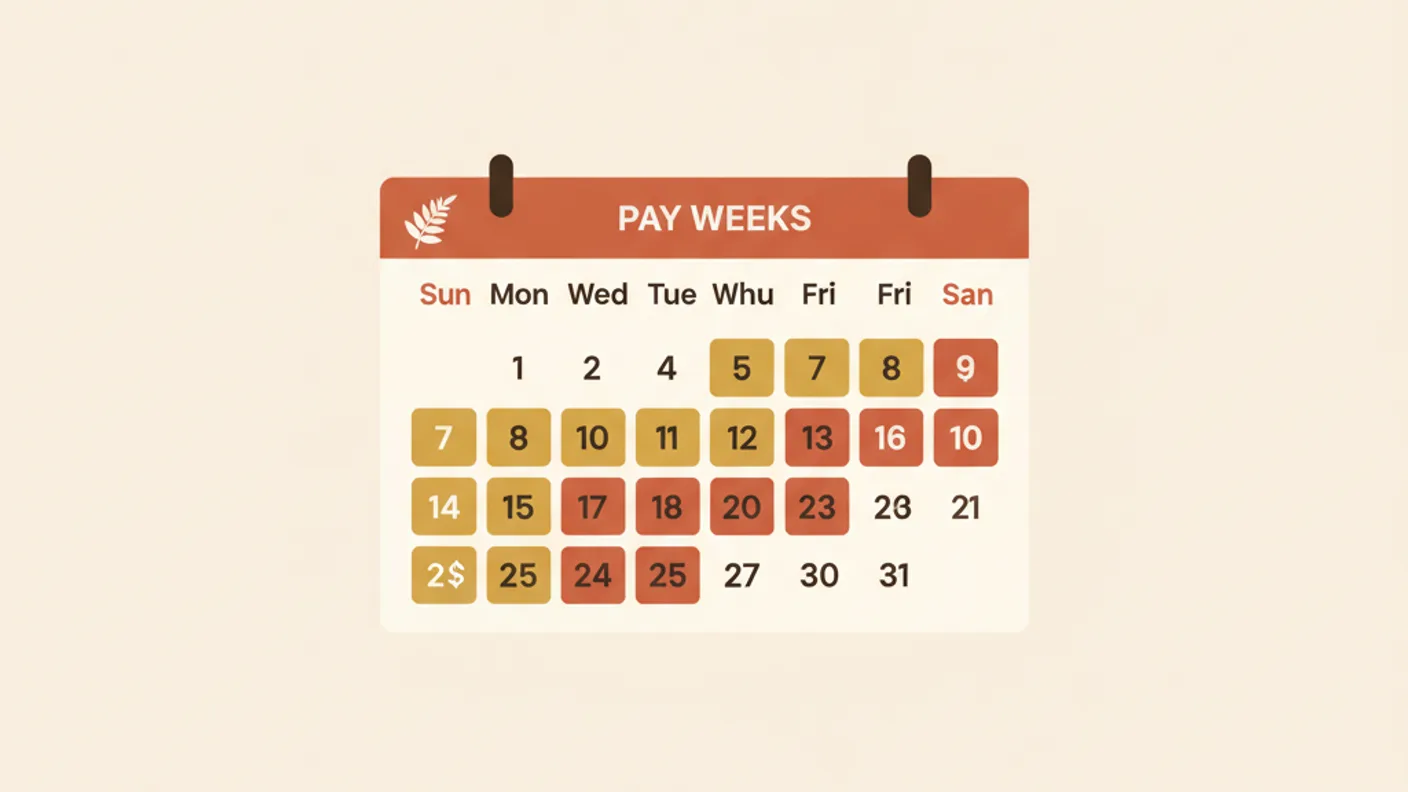
Quick answer: Work out your take-home pay per cycle, list the bills that leave before your next payday, and give whatever is left a job. Three numbers, not forty categories. You can have a working budget in under ten minutes.
Budgeting doesn't have to mean colour-coded spreadsheets and hours of data entry. Here's how to get started in under 10 minutes.
May 2026 update: Cost-of-living figures and KiwiSaver guidance refreshed. Average NZ fixed-cost share has crept up to ~60% of take-home pay for renters in main centres — if that is you, budgeting on a low income is the more useful starting point; the rule-of-thumb numbers below reflect that.
Why most budgets fail
The average budget lasts 3 weeks. The reason? They're too complicated. You don't need to track every dollar, you need to know three numbers: what comes in, what's committed, and what's left. This is the core of the safe-to-spend approach.
The 3-number method
1. What comes in (monthly income)
If you're paid fortnightly (most Kiwis are), multiply your take-home pay by 26, then divide by 12. That's your true monthly income. For more detail on this, see our fortnightly pay budgeting guide.
Example: $2,100 fortnightly = $2,100 x 26 / 12 = $4,550/month
2. What's committed (fixed costs)
Add up everything that auto-pays or has to be paid monthly:
- Rent or mortgage
- Power, internet, phone
- Insurance (car, contents, health)
- Loan repayments
- Subscriptions (Netflix, Spotify, gym)
- KiwiSaver (if voluntary top-ups)
For most Kiwis, this is 50-65% of income. If it's over 70%, you're stretched.
3. What's left (safe to spend)
Income minus fixed costs = your safe-to-spend amount. Divide this by 4 to get a weekly spending budget.
Example: $4,550 - $3,000 fixed = $1,550 safe to spend = ~$387/week
That $387 covers groceries, petrol, dining, entertainment, everything that isn't auto-paid. If you're under that number each week, you're winning.
Making it stick
Automate the boring bits. Set up automatic payments for all fixed costs on payday. What's left in your account is what you can spend. Learn more about automating your finances.
Check once a week, not daily. Sunday evening, check your balance against your weekly target. That's it. No daily guilt-checking.
Use a tool that does the maths. Apps like Steady connect to your bank and calculate your safe-to-spend amount automatically, no manual entry. The number updates automatically as new transactions come through.
The biggest mistake to avoid
Don't budget for perfection. Budget for awareness. The goal isn't to hit your target every week, it's to know when you're off track early enough to adjust.
A week over budget isn't a failure, it's information. Next week, ease off. Over time, the trend matters more than any single week.
NZ-specific tips
Pay attention to fortnightly vs monthly. Some months have 3 pay days if you're paid fortnightly. Those "bonus" months are a great time to top up savings or pay down debt.
Use Powerswitch. Switching power providers saves the average household $300-500/year.
Review your KiwiSaver rate. If you're on 3.5% and your employer matches 3.5%, you're getting the maximum benefit. Going higher only makes sense if you can afford it. Read our KiwiSaver tips for more.
What is the 50/30/20 rule, and does it work in New Zealand?
It splits take-home pay three ways: 50% needs, 30% wants, 20% savings and debt. As a starting shape it is fine. As a target it breaks on NZ rents.
A renter in Auckland or Wellington can be at 60% before groceries, which makes the 50 impossible and the 20 a fantasy. Chasing the ratio then just adds guilt to an already tight month.
Use it as a mirror instead. If needs are running well over half, the fix is in the big fixed costs, not in the coffees.
How much should I spend on rent?
The old rule is a third of take-home pay, and it is a useful line even where it is not achievable.
Above that, small shocks turn into big ones, because there is no slack left to absorb a vet bill or a power spike. Below it, almost everything else gets easier without any budgeting skill at all.
If you are over the line, the honest options are a flatmate, a cheaper place, or accepting that saving will be slow for now. Our rent affordability guide works through the maths.
What do I do when I go over budget?
Nothing dramatic. Look at what it was, then decide whether next week absorbs it.
One over week is information, not failure. It usually has an obvious cause, and the useful question is whether that cause repeats. A birthday does not. A subscription you forgot does.
The move that keeps budgets alive is a small correction early, rather than a big one after three weeks of not looking.
Do I need an app to budget?
No. A budget is three numbers, and a piece of paper holds three numbers.
What an app buys you is the part people quietly stop doing: entering every transaction. Steady reads them from your bank feed instead and keeps the three numbers current, which is the difference between a budget that lasts a month and one that lasts a year.
Start on paper if that is what gets you started today. Move when the typing gets old.

Written by Sam Wilson
Founder, Steady
Sam is a New Zealand founder building Steady, a personal finance app designed for Kiwis, integrated with every major NZ bank via Akahu. He writes about money, bank integrations, and what actually works for everyday New Zealanders.More about Sam
Steady connects your bank and tracks it all automatically, no spreadsheets. Join the waitlist for early access.
Suggested reads
More from the Steady blog
What is 'Safe to Spend'? The Budgeting Number That Actually Works
One number replaces your entire budget. Safe to Spend is what you can spend before your next payday without missing a bill. How it works, and where it breaks.
How to Track Spending Automatically in NZ (2026 Guide)
Still entering transactions by hand? How to connect your NZ bank, what two years of history gets you, and how often the data actually refreshes.
How to Automate Your Finances in NZ (Set and Forget)
Set it up once, never think about it again. This NZ automation guide puts your savings, bills, and tracking on autopilot in under 30 minutes.
Ready to sort your money?
Steady connects to your NZ bank accounts and helps you track spending, set goals, and get AI-powered insights.
Try Steady free