Why Checking Your Money for 2 Minutes a Day Actually Works
The science behind why a quick daily money check-in beats a monthly budget review, and how to build the habit without it feeling like a chore.
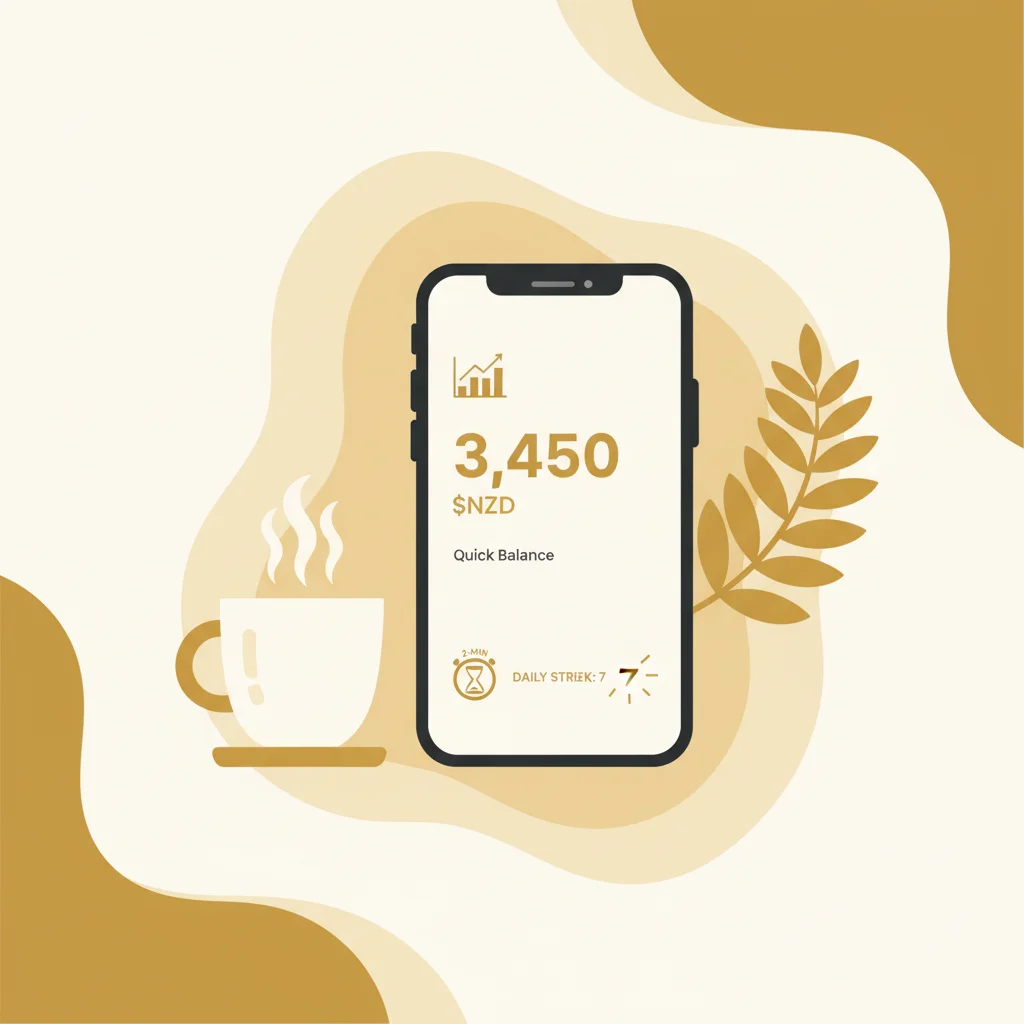
The short version
- Behavioural researchers call it the "awareness effect." Simply knowing you'll look at your spending later changes how you spend in the moment.
- A 2-minute daily check-in is 14 minutes a week.
Most financial advice says to sit down once a month and review your budget. The problem? Almost nobody actually does it. By the time you look, the month is already over and the damage is done. (This is also why apps beat spreadsheets for most people.)
There's a better approach: spend 2 minutes a day glancing at your money. Not budgeting. Not spreadsheets. Just looking.
The psychology behind it
Behavioural researchers call it the "awareness effect." Simply knowing you'll look at your spending later changes how you spend in the moment. It's the same reason people eat less when they keep a food diary, even if they don't change their diet plan.
The same effect turns up in personal finance. People who look at their balance most days tend to spend less on discretionary purchases than people who look once a month, and not because their budget was stricter. They were simply more aware of what they were doing at the time.
What a daily check-in actually looks like
This isn't about crunching numbers. It's about pattern recognition:
Morning (30 seconds): Glance at yesterday's transactions. Anything unexpected? Any subscriptions you forgot about?
That's it. Seriously.
Over time, you start noticing things:
- "I've tapped my card at a cafe every day this week"
- "That subscription renewed and I haven't used it in months"
- "I'm already halfway through my grocery budget and it's only the 15th"
These small realisations drive real behaviour change, without willpower or discipline.
Why monthly reviews fail
Monthly budget reviews fail for three reasons:
1. Too much data. Looking at 200+ transactions at once is overwhelming. Your brain glazes over.
2. Too late. By the end of the month, the spending already happened. You can't un-buy things.
3. Guilt cycle. Seeing a month of overspending feels bad. So you avoid looking next month too. The cycle continues.
Daily check-ins avoid all three problems. Small amount of data, day-to-day awareness, no guilt spiral.
Building the habit
The trick is making it effortless. If checking your money requires logging in, navigating menus, and downloading CSV files, you won't do it.
What works:
- Open an app that shows your spending summary instantly, no login friction
- Pair it with something you already do, check your money while waiting for the kettle, or right after brushing your teeth
- Keep it under 2 minutes, if it takes longer, the habit won't stick
Some apps gamify this with streaks, XP, and daily challenges. It sounds gimmicky, but streak mechanics work, Duolingo proved that. The key is that the reward (streak count, XP) reinforces the behaviour (checking your finances) until it becomes automatic. This is one of the 5 money habits backed by behavioural science.
The compound effect
A 2-minute daily check-in is 14 minutes a week. That's less time than one monthly budget session, but spread out so you're always aware rather than playing catch-up.
After 30 days, most people report three changes:
- Fewer impulse purchases, awareness creates a natural pause
- Caught subscriptions they forgot about, typically $20-50/month in savings
- Better sense of "safe to spend", knowing roughly what's left without checking
After 90 days, it's automatic. You don't think about it, you just know where your money is.
Will checking every day make me more anxious about money?
For most people it does the opposite, and the reason is worth understanding before you try it.
Money anxiety mostly lives in the gap between what you think is in the account and what actually is. Looking closes the gap. The dread of what you might find is nearly always worse than the number.
If looking does spike your anxiety, change what you look at rather than how often. One number — what is safe to spend — carries no judgement. A full transaction list at midnight does.
What exactly should I look at?
Yesterday's transactions, and one number for what is left. Thirty seconds, not an audit.
You are checking for two things. Anything you do not recognise, which is the fraud and forgotten-subscription check. And whether the week is going roughly as expected, which is the course-correction.
Everything else — categories, trends, comparisons — is a monthly job at most, and it does not belong in a daily habit.
Is daily really better than weekly?
Daily is better for awareness. Weekly is better than nothing, and nothing is what most monthly plans turn into.
The advantage of daily is that the information is still actionable. On Tuesday you can change Wednesday. On the 31st you can only regret the month.
If daily feels like too much, do it on the days you spend. The point is to look while the week can still be changed.
What if my transactions have not shown up yet?
That is normal, not a fault. Bank data in New Zealand refreshes on a schedule rather than continuously, at most twice a day.
So this morning's coffee may not be there this morning, and a weekend of spending often arrives together on the Monday. Anything you have tapped for but not seen is still coming.
It is why the habit is a glance at a pattern rather than a reconciliation. If you need the exact balance this second, your banking app is the place for that.
Start today
Pick one thing: open your banking app or finance tool and look at yesterday's transactions. That's your day-one check-in. Tomorrow, do it again. That's it.
The goal isn't to become a budgeting expert. It's to become someone who knows where their money goes, and that starts with 2 minutes a day. Try Steady's daily dashboard, it's designed for exactly this kind of quick check-in.

Written by Sam Wilson
Founder, Steady
Sam is a New Zealand founder building Steady, a personal finance app designed for Kiwis, integrated with every major NZ bank via Akahu. He writes about money, bank integrations, and what actually works for everyday New Zealanders.More about Sam
Steady connects your bank and tracks it all automatically, no spreadsheets. Join the waitlist for early access.
Suggested reads
More from the Steady blog
How to Track Spending Automatically in NZ (2026 Guide)
Still entering transactions by hand? How to connect your NZ bank, what two years of history gets you, and how often the data actually refreshes.
What's Your Money Personality? 5 Types of NZ Spenders
Are you a Spender, Saver, Avoider, or Monk? Your spending personality explains why budgets keep failing, and what to do instead.
How to Set Financial Goals That You'll Actually Achieve
92% of financial goals fail. The three things the ones that work have in common, and how to set yours up the same way.
Ready to sort your money?
Steady connects to your NZ bank accounts and helps you track spending, set goals, and get AI-powered insights.
Try Steady free