Capital Gains Tax in NZ: What Exists, What Doesn't (2026)
NZ doesn't have a general capital gains tax, but it has the bright-line test on property, FIF rules on overseas shares, and CGT-by-another-name on traders. A clear picture for Kiwi investors.
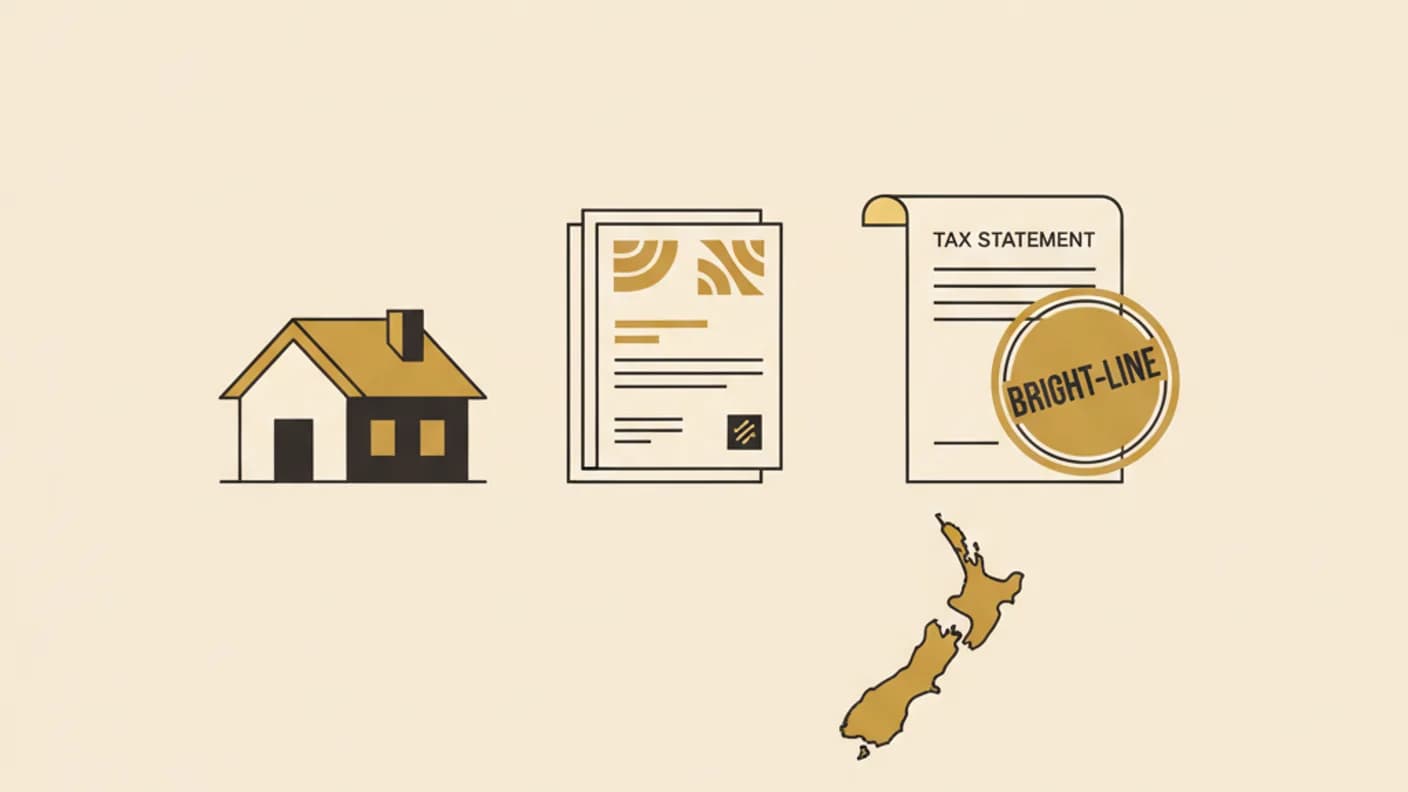
The short version
- If you buy a residential property and sell within 2 years (5 years for new builds purchased before March 2024, 10 years for older purchases), the gain is taxable as income at your marginal rate.
- If IRD decides you're a "trader", buying and selling with the intention of making a profit, your gains are taxable income.
- If you own more than NZ$50,000 in overseas (non-Australian) shares, Tesla, Apple, Vanguard ETFs, etc, you fall under the Foreign Investment Fund (FIF) regime.
New Zealand famously has "no capital gains tax", but that's a half-truth. Several CGT-style rules apply depending on what you own and how you behaved.
Here's what actually gets taxed as of 2026.
1. Property: the bright-line test
If you buy a residential property and sell within 2 years (5 years for new builds purchased before March 2024, 10 years for older purchases), the gain is taxable as income at your marginal rate.
- Your main home is exempt (with conditions, must be your main residence for most of the ownership period).
- Inherited property is exempt if sold within a reasonable timeframe.
- Investment property: Taxable. The gain is added to your IR3 income for the year.
In 2026, the bright-line is 2 years for most purchases, much shorter than the 10-year window that existed pre-2024.
2. Trader status (on anything)
If IRD decides you're a "trader", buying and selling with the intention of making a profit, your gains are taxable income. This applies to:
- Property flippers.
- Share traders who buy/sell frequently.
- Crypto traders (any frequent buying and selling).
The test is "intent at the time of purchase." If you bought a house to fix and flip, the gain is taxable even if it took 5 years. If you bought to live in it, generally not.
IRD doesn't publish a number of trades that triggers trader status, they look at pattern. Trading every few weeks for a year → almost certainly a trader. Holding for 5+ years → almost certainly not.
3. Overseas shares: FIF rules
If you own more than NZ$50,000 in overseas (non-Australian) shares, Tesla, Apple, Vanguard ETFs, etc, you fall under the Foreign Investment Fund (FIF) regime.
The default method is Fair Dividend Rate (FDR): you're taxed each year on a deemed 5% return on the value of your holdings, regardless of actual gains. So $100k of overseas shares → $5k deemed income → ~$1,650 tax at 33%.
Australian-listed shares are exempt from FIF.
Below $50k, you're taxed only on actual dividends, not unrealised gains.
4. KiwiSaver and PIE funds
PIE funds (most KiwiSaver providers, Sharesies, InvestNow's NZ funds) are taxed at your Prescribed Investor Rate (PIR), 10.5%, 17.5%, or 28% depending on your income.
The tax is on the fund's gains plus dividends, and it's withheld inside the fund. You never see a tax bill, but the returns you see are post-tax.
Important: check your PIR each year. Wrong PIR (usually too low) = a bill in your IR3.
5. Crypto
Crypto held as an investment is taxed at sale if IRD considers you a trader (see point 2). Crypto held as personal use (paying for things) and sold within reasonable time is generally not taxed.
In practice, IRD treats most crypto activity as trading, every swap between coins is a taxable event. Track every transaction.
6. What's NOT taxed
- Sale of your main home (most cases).
- Long-held shares (>5 years, infrequent trading, no clear profit intent).
- Inheritances.
- Gifts.
- Lottery / Lotto wins.
- Capital from selling a small business below specific thresholds.
The 2026 political picture
A formal CGT is back on the political agenda but as of June 2026, no legislation has been introduced. Watch the 2026 Budget for signals.
Does New Zealand have a capital gains tax or not?
Not a general one, and several specific ones. Both halves of that sentence are true, which is why the question keeps coming back.
There is no broad tax on the gain when you sell an asset. There are targeted rules that catch property sold inside the bright-line period, anyone IRD treats as a trader, and overseas shares above the FIF threshold.
So the honest answer is that most ordinary long-term investing is untaxed on the gain, and the exceptions are specific enough to check against your own situation.
How does IRD decide I am a trader?
By your pattern and your intent when you bought, not by a number of trades.
Frequent buying and selling, a short average holding period, and any evidence that the purchase was made to resell all point one way. Buying to hold, and actually holding, points the other.
Nobody rules on this in advance. If your activity looks like a business, the safest assumption is that it will be treated as one, and an accountant is cheaper than finding out later.
Do I pay tax on my Sharesies or Kernel account?
Usually yes, and usually without ever seeing a bill.
Most New Zealand funds on those platforms are portfolio investment entities, which means tax is calculated and paid inside the fund at your prescribed investor rate. The return you see is already after that.
Shares you hold directly are different. Dividends are taxable, and overseas holdings above the FIF threshold bring their own annual calculation regardless of whether you sold anything.
What happens if I go over the $50,000 overseas shares threshold?
You move onto the FIF rules from that tax year, and the calculation changes shape entirely.
Under the default fair dividend rate method you are taxed on a deemed return on the value of the holdings, whether or not you sold and whether or not they rose. That is the part that surprises people.
The threshold is measured in New Zealand dollars on cost, so a falling exchange rate can push you over without you buying a thing. Check the NZD figure, not the US one.
Where Steady fits
Connecting your Sharesies, Kernel or KiwiSaver via Akahu open banking lets Steady track the value of your investments alongside your bank balances, useful when working out if you've crossed the FIF $50k threshold.
Disclaimer: General education. Tax is specific to your situation; talk to a chartered accountant for anything material.
Steady tip: If you're approaching the $50k overseas-shares threshold, log into your broker and check the NZD value (not USD), FX moves can quietly push you over.

Written by Sam Wilson
Founder, Steady
Sam is a New Zealand founder building Steady, a personal finance app designed for Kiwis, integrated with every major NZ bank via Akahu. He writes about money, bank integrations, and what actually works for everyday New Zealanders.More about Sam
Steady connects your bank and tracks it all automatically, no spreadsheets. Join the waitlist for early access.
Suggested reads
More from the Steady blog
How to Track All Your Investments in One Place (NZ Guide)
KiwiSaver + Sharesies + Hatch = a mess. Here's how to see your entire NZ investment portfolio in one dashboard, updated automatically.
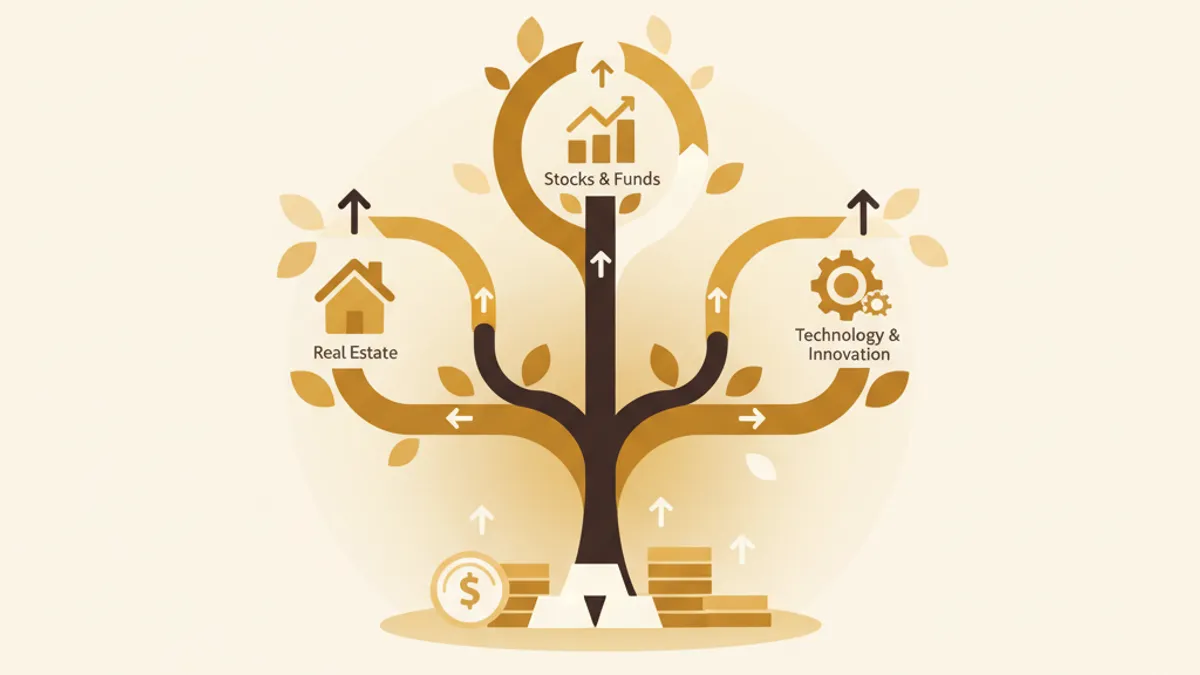
How to Invest $10,000 in New Zealand (2026 Options)
Got $10K sitting in a savings account earning 2%? Here are 6 smarter things to do with it in NZ, ranked from safest to highest return.

Kernel vs Sharesies vs InvestNow (2026): Fees Compared, One Clear Winner by Use Case
Kernel wins on pure index-fund costs, InvestNow on fund range, Sharesies on ease. Every fee compared side-by-side in dollars, what $10k actually costs you per year on each, plus the verdict by use case.
Ready to sort your money?
Steady connects to your NZ bank accounts and helps you track spending, set goals, and get AI-powered insights.
Try Steady free