NZ Mortgage Rates 2026: Fixed vs Floating and How to Save Thousands
NZ mortgage rates updated May 2026, fixed vs floating, the latest 1- and 2-year rates from the big four, and the fortnightly trick that still saves $30k+ over the loan life.

The short version
- As we settle into 2026, the New Zealand mortgage market has found a new rhythm.
- The core decision for any mortgage holder revolves around whether to fix your interest rate or let it float.
- For many homeowners, the smartest strategy isn't to choose either fixed or floating, but to embrace both.
Alright, Kiwis, let’s talk mortgages. For many of us, it’s the biggest financial commitment we’ll ever make, a foundational pillar of our financial future. But navigating the world of interest rates, fixed terms, floating options, and bank negotiations can feel like trying to understand the All Blacks’ lineout calls without a playbook.
Here at Steady, we believe in empowering you with the knowledge and tools to take control of your finances. It’s 2026, and the landscape of home loans continues to evolve, presenting both challenges and opportunities. Whether you're a first-home buyer dreaming of your own patch of Aotearoa or a seasoned homeowner looking to optimise your current loan, understanding your options and knowing how to secure the best deal is crucial.
This isn’t about passively accepting what your bank offers. It’s about being informed, being proactive, and making your mortgage work harder for you. We’ll dive into the prevailing rates in 2026, break down the fixed vs. floating debate, explore smart strategies like split loans, and give you the confidence to negotiate like a pro.
Updated 15 September 2026. Carded rates at the big five sit at roughly 4.59% – 4.69% for 1-year fixed (ASB and BNZ 4.59%, Kiwibank 4.65%, ANZ and Westpac 4.69%) and 6.14% – 6.34% floating. Note the gap: fixed is well below floating, because floating tracks the OCR and the Reserve Bank has now raised it twice, to 2.75% on 2 September. These are carded rates, banks routinely shave 0.20%–0.40% off for new lending or refixes if you ask. If your existing fix expires in the next 90 days, request quotes from at least two banks before you let your existing lender auto-roll you. The carded rate is a starting point, not the final answer.
Navigating NZ Mortgage Rates in 2026
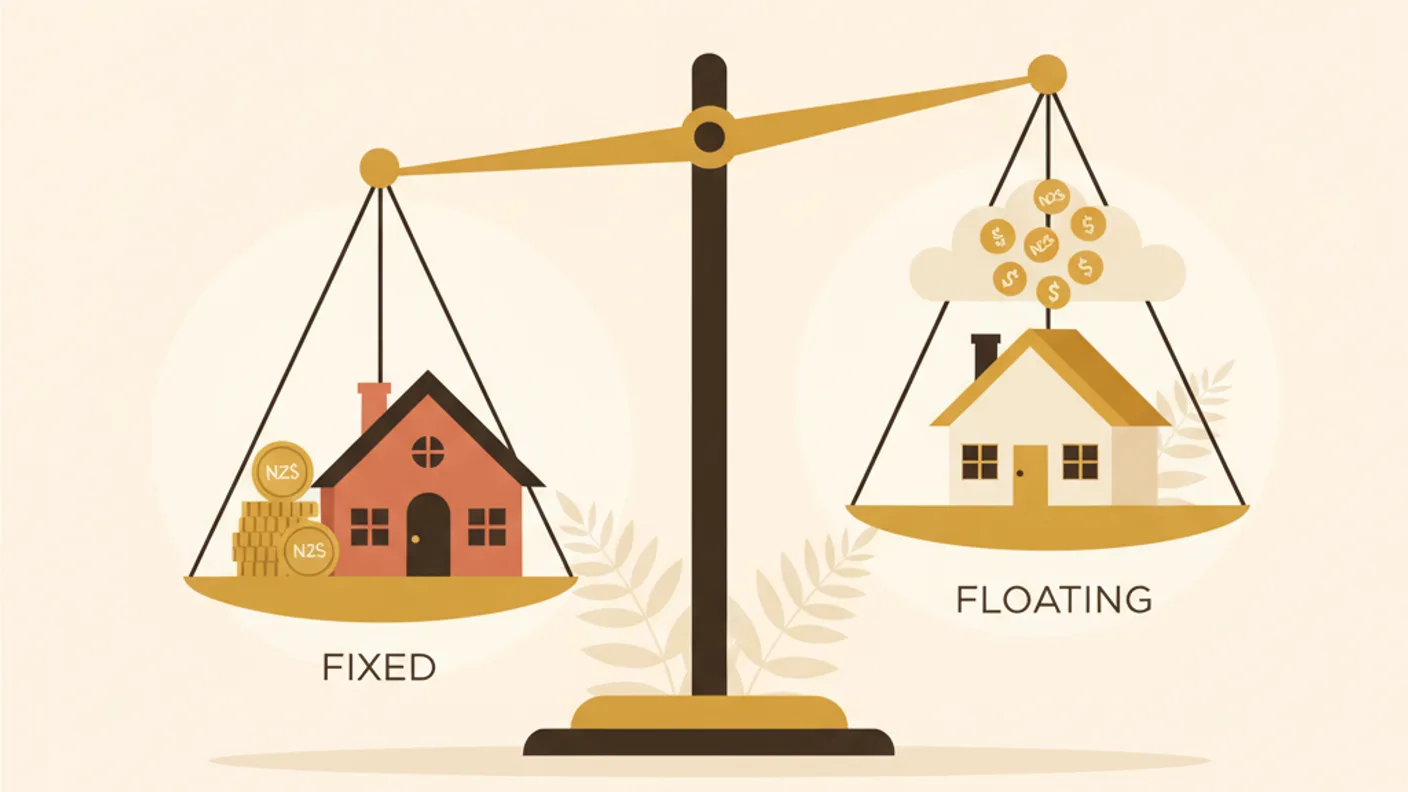
As we settle into 2026, the New Zealand mortgage market has found a new rhythm. While global economic factors and domestic inflation continue to influence the Reserve Bank of New Zealand's Official Cash Rate (OCR), we've seen some stabilisation, albeit at levels that still demand astute financial planning.
Here are the indicative retail mortgage rate ranges you can expect to see across major New Zealand banks in 2026. Keep in mind, these are general ranges, and your specific rate will depend on factors like your loan-to-value (LVR) ratio, your credit history, and your ability to negotiate.
- Fixed 1-Year Term: 4.59% - 4.69%
- Floating Rate: 6.14% - 6.34%
Carded rates at the big five, mid-September 2026, from interest.co.nz.
Only the two terms we have a current source for are listed. The 2, 3, 4 and 5-year rows that used to sit here were from early 2026 and had drifted more than a full percentage point from the market; rather than carry stale numbers or estimate new ones, check interest.co.nz for the longer terms.
Disclaimer: These rates are indicative for 2026 and subject to market fluctuations. Always check with your bank or a mortgage broker for the most current and personalised rates.
Where the curve sits between terms moves with what the market expects the OCR to do, and with the Reserve Bank now raising rather than cutting, the shape has been changing through 2026. Check the current spread rather than trusting any article's description of it, including this one.
Floating rates stay well above fixed, which is what you pay for the flexibility. The ranges are a starting point; what matters is what they do to your repayment.
Fixed vs. Floating: The Great Debate
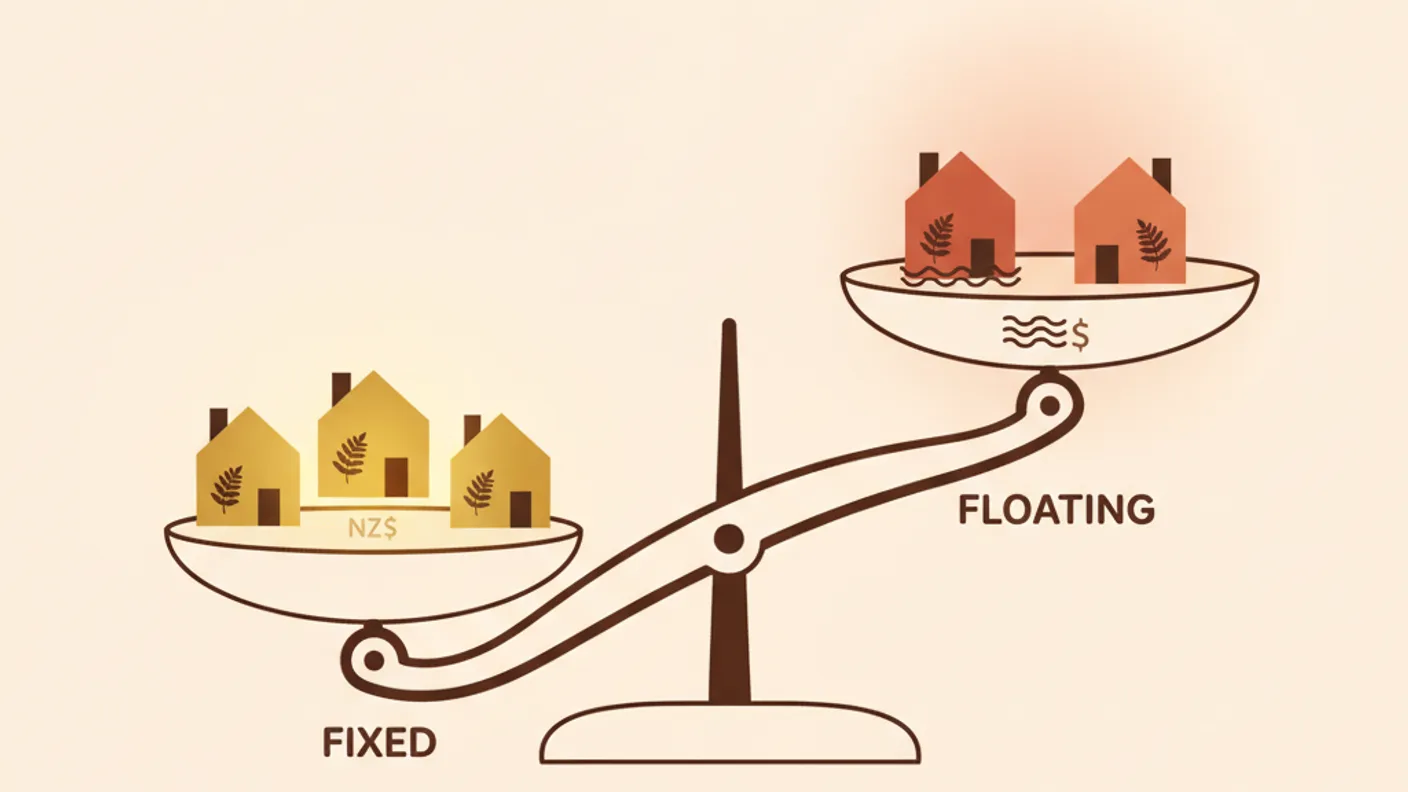
The core decision for any mortgage holder revolves around whether to fix your interest rate or let it float. Both have distinct advantages and disadvantages, and the "best" option often comes down to your personal financial situation, risk tolerance, and market outlook.
Fixed Rate Mortgages: Predictability and Peace of Mind
A fixed rate mortgage means your interest rate remains constant for a set period, typically ranging from six months to five years.
Pros:
- Budget Certainty: Your mortgage repayments are the same every period, making budgeting straightforward and predictable. You know exactly what’s going out — and if you want to know whether yours is typical, here is what Kiwis actually repay each month.
- Protection from Rate Hikes: If interest rates rise during your fixed term, you're shielded from those increases. This can offer immense peace of mind in volatile markets.
- Easy Planning: It simplifies long-term financial planning, as a major expense is locked in.
Cons:
- Miss Out on Rate Drops: If interest rates fall during your fixed term, you won't benefit from those lower rates unless you break your fixed term.
- Break Fees: Changing your fixed rate mortgage before the term expires (e.g., to sell your house, refinance, or move to a lower rate) can incur substantial break fees. These can be thousands of dollars.
- Less Flexibility: Generally, banks have limits on how much extra you can pay off a fixed loan without penalty.
Floating Rate Mortgages: Flexibility and Responsiveness
A floating (or variable) rate mortgage means your interest rate can change at any time, usually in response to movements in the OCR.
Pros:
- Ultimate Flexibility: You can make extra payments whenever you like without penalty, which can significantly reduce your loan term and total interest paid. Many floating loans also allow you to redraw these extra payments if needed.
- Benefit from Rate Drops: If the OCR and subsequent retail interest rates fall, your repayments will decrease immediately.
- No Break Fees: You're not tied into a contract, so there are no penalties for refinancing or paying off your loan early.
- Offset Options: Some banks offer offset accounts with floating loans, where money in your everyday bank account directly reduces the principal balance your interest is calculated on.
Cons:
- Uncertainty: Your repayments can change at any time, making budgeting more challenging and less predictable.
- Exposed to Rate Hikes: If interest rates rise, your repayments will increase, potentially straining your budget.
- Higher Rates: Floating rates are almost always higher than equivalent fixed rates, reflecting the bank's risk in offering such flexibility.
The Savvy Approach: Splitting Your Mortgage
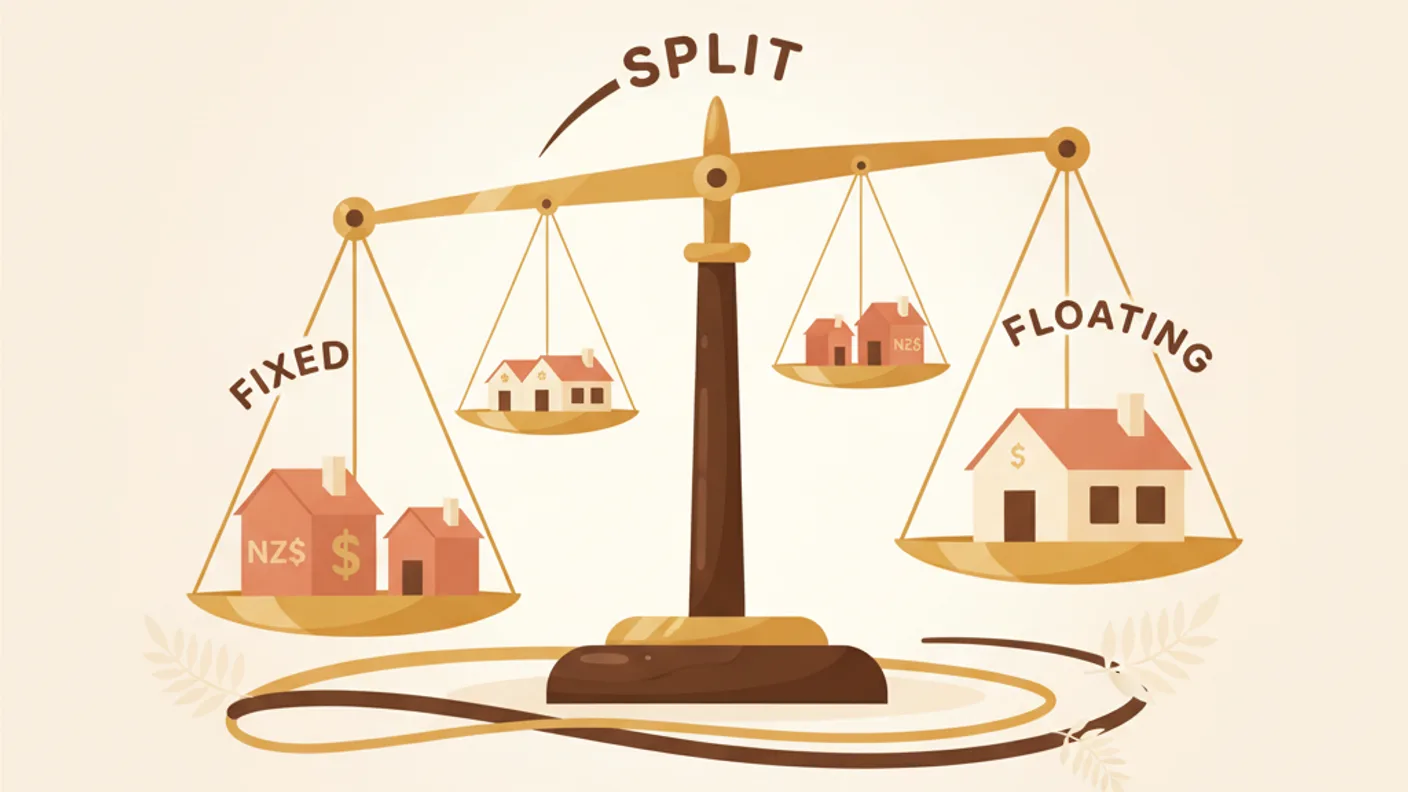
For many homeowners, the smartest strategy isn't to choose either fixed or floating, but to embrace both. A split loan allows you to divide your mortgage into multiple portions, each with its own interest rate type and term. This is like having your cake and eating it too, giving you the best of both worlds and hedging your bets against future rate movements.
How it works: You might, for instance, fix a large portion of your mortgage for a couple of years, providing stability for your main repayments. Then, you could put a smaller portion on a floating rate, giving you the flexibility to make extra payments whenever you have spare cash, or to easily access funds if an emergency arises.
Example Scenarios:
- 70% Fixed (2-year term), 30% Floating: Provides certainty for the bulk of your loan while allowing flexibility and penalty-free extra payments on the floating portion.
- 50% Fixed (2-year term), 50% Fixed (4-year term): This strategy staggers your refixing dates. If rates are high when one portion comes due, the other is still locked in. It also means you’re not exposed to the entire loan needing to be refixed at potentially unfavourable rates at a single point in time. This smooths out the "refix shock."
- A smaller portion as a revolving credit facility: This is a type of floating loan where your bank account is directly linked to your mortgage. Your income goes in, and expenses come out, constantly reducing your interest-bearing principal. This can save a significant amount of interest over time but requires strict budgeting.
A split loan strategy offers greater control and can be tailored precisely to your financial goals and comfort with risk.
Mastering the Negotiation: Getting the Best Deal from Your Bank

This is where many Kiwis leave money on the table. Your bank's initial offer is rarely their best offer. Banks are businesses, and they want to retain your business and attract new customers. You have more power than you think!
- Shop Around, Seriously: Don't just go to your current bank. Get quotes from at least two, preferably three, other lenders. Even if you're happy with your current bank, having competing offers is your strongest negotiation tool. Steady can help you compare options from various banks and lenders.
- Use Competing Offers as Leverage: Once you have a better offer from another bank, go back to your current bank and tell them you've received a more competitive rate. Ask them to match or beat it. Be polite but firm.
- Highlight Your Value: Are you a loyal customer with a good payment history? Do you have other accounts or investments with them? Do you have a strong income and low debt? Remind them of your value as a customer.
- Ask for More Than Just a Rate: The interest rate isn't the only thing up for grabs. Ask for:
* Cashback: Many banks offer a lump sum cashback for new customers or those refinancing a significant amount. * Reduced or Waived Fees: Loan application fees, valuation fees, or even annual account fees. * Interest-Free Thresholds: An interest-free amount on your transactional account can save you a surprising amount over time. * Better Terms: More flexible prepayment options on fixed rates, or better redraw facilities on floating.
- Consider a Mortgage Broker: These professionals work for you, not the bank. They have access to rates and deals that might not be publicly advertised, understand the nuances of each lender's criteria, and are expert negotiators. They can save you time, stress, and often, money.
Remember, the worst they can say is no. But often, they’ll come back with a better deal.
Timing is Everything: When to Refix Your Mortgage
If you're on a fixed rate, your mortgage will eventually need to be refixed. This is a critical opportunity to reassess your strategy and secure the best possible terms for the next period.
- Don't Wait Until the Last Minute: Most banks will contact you about 4-6 weeks
Frequently Asked Questions
Should I fix or float my NZ mortgage in 2026?
It depends on your view of where rates are heading. Fixed gives you certainty for the term length; floating lets you make extra repayments without break fees but exposes you to rate changes. A common strategy is splitting your mortgage between fixed and floating portions.
How much can I save by negotiating my mortgage rate?
Often 0.2-0.5 percentage points off the published rate, plus cashback offers up to 0.7% of the loan value. On a $600,000 mortgage, a 0.3% rate reduction saves roughly $1,800/year in interest.
When should I refix my mortgage?
The smart window is 30-60 days before your current fixed rate expires. Most banks let you "lock in" the new rate up to 60 days early, useful if you expect rates to rise. If you refix later than expiry, you'll roll onto the floating rate (usually the highest) until the new fix kicks in.
What's the difference between break fees and early repayment fees?
A break fee applies if you fully exit a fixed-rate loan before the term ends (selling the house, refinancing). An early repayment penalty applies if you make lump-sum payments above the bank's allowance during a fixed term. Both are calculated based on the rate gap between your fix and current market rates.
Is now a good time to buy a house in NZ?
It depends on your timeline and finances more than market timing. If you have a stable income, a deposit, and plan to stay in the home 5+ years, the maths usually works out across cycles. Trying to time the market typically leads to delays that cost more than any rate dip.

Written by Sam Wilson
Founder, Steady
Sam is a New Zealand founder building Steady, a personal finance app designed for Kiwis, integrated with every major NZ bank via Akahu. He writes about money, bank integrations, and what actually works for everyday New Zealanders.More about Sam
Steady connects your bank and tracks it all automatically, no spreadsheets. Join the waitlist for early access.
Suggested reads
More from the Steady blog

How to Save for Your First Home in NZ (2026 Guide)
NZ house deposit in 2026: you need $120k (or less with these tricks). KiwiSaver withdrawal, what replaced the First Home Grant, and the exact savings plan.
NZ Bank Accounts Compared: Which One is Right for You? (2026)
ANZ vs ASB vs BNZ vs Westpac vs Kiwibank, which NZ bank account actually pays the best interest in 2026? We compared every rate.

Fortnightly Pay Budgeting: The NZ Guide for 26 Paydays
Paid fortnightly? You get 2 'bonus' pay months per year. Here's how to budget for fortnightly pay in NZ, and what to do with the extras.
Ready to sort your money?
Steady connects to your NZ bank accounts and helps you track spending, set goals, and get AI-powered insights.
Try Steady free