How to Save $5,000 in 6 Months: A Realistic NZ Plan
A week-by-week, paycheck-by-paycheck plan to save $5,000 in 6 months as a Kiwi, what you'll need to cut, what to automate, and where the extra money actually comes from.
The short version
- To save $5,000 in 6 months you need to put away $833 per month, or about $192 per week.
- Before you change anything else, open a separate savings account at a bank that's NOT your daily one.
- Most Kiwis underestimate how much fat sits in four specific categories.
Six months. Five grand. A real plan.
If you've been wanting to build an emergency fund, save a deposit, or just prove to yourself that you CAN save, this is a guide to actually doing it. No "stop buying coffee" nonsense. Just the maths and the moves.
The honest maths
To save $5,000 in 6 months you need to put away $833 per month, or about $192 per week. That's the headline number. It looks scary. Let's break it down.
For most Kiwis on a regular salary getting paid fortnightly, that's:
- $385 per fortnight moved to savings on payday
- Or $416 per month out of two paydays
If your take-home pay is $4,500/month, you need to live on $3,667 for six months. If your take-home is $3,500/month, you need to live on $2,667, which is much harder, and a sign that part of this plan needs to come from boosting income, not just cutting spend.
Be honest about which camp you're in before you start.
Step 1: Open the account first
Before you change anything else, open a separate savings account at a bank that's NOT your daily one. Why a different bank? Because friction matters. If your savings sit in the same banking app you open every day, you'll start "borrowing from yourself" within three weeks.
Good options for NZ savers in 2026:
- Kiwibank Notice Saver, 4-5% if you can give 32 days notice
- Heartland Direct Call, competitive on-call rate, instant access
- Squirrel On-Call Account, strong rate, online-only
Set up the AP (automatic payment) from your daily account to the new savings account on payday +1. Not "end of month when I see what's left." Payday +1, no exceptions. This is the single biggest determinant of whether you'll succeed.
Step 2: Find the $192/week (the four levers)
Most Kiwis underestimate how much fat sits in four specific categories. Audit each one before deciding you "need to earn more."
Lever 1: Subscriptions, the silent leak
Pull up a 90-day bank statement and list every recurring charge. Most Kiwis we work with find $80-$150/month of subscriptions they either forgot about or no longer use. Streaming services, gym memberships, app trials that converted, that "free" software trial that quietly auto-renewed.
Easy wins:
- Audit Netflix/Disney+/Apple TV+/Neon, keep one, rotate the others seasonally
- Cancel anything you haven't used in 30 days, you can always rejoin
- Switch annual plans where possible (often 15-25% cheaper than monthly)
Realistic monthly saving: $60-$100
Lever 2: Power, internet, phone
Most NZ households are on the wrong plan for their usage. Run a 5-minute audit using PowerSwitch (consumer.org.nz). Switch to whoever's cheapest for your meter type, most people save $20-40/month immediately.
Phone plan: do you actually use the data you're paying for? Skinny, Warehouse Mobile, Slingshot, and Kogan all run plans under $25/month with plenty for normal use.
Realistic monthly saving: $40-$80
Lever 3: Food
This is the big one. The average NZ household spends 35-45% more on food than they realise because of the gap between "groceries" and "delivery + takeaways + cafes." Track yours for two weeks before you change anything, most people are shocked.
The 80/20 fix:
- Cut takeaways from "whenever" to once per week, saves $80-$150/month
- Cap cafe coffees at three per week, saves $30-$60/month
- Plan grocery shops around a weekly menu, saves $40-$80/month on impulse buys
You don't need to eat lentils. You just need to stop the unconscious "$18 lunch every day" pattern.
Realistic monthly saving: $200-$400
Lever 4: One-off lifestyle commitments
This is where most people balk: gym memberships you haven't used since February, the $90/month Pilates package, the second car you barely use, the office parking space when you actually take the bus most days.
For 6 months, you can pause or cut ANYTHING. It's a defined window, not a permanent identity change.
Realistic monthly saving: $50-$200
Adding it up: $350-$780/month in savings without earning a single extra dollar. That's $2,100-$4,680 across six months, already most of the way to $5,000.
Step 3: If the levers aren't enough, boost income
If your numbers genuinely don't add up after auditing the four levers, you need extra income. Six months is long enough to start a small income stream and have it actually compound.
The most realistic NZ side-income options for someone working full-time:
- Selling stuff: Trade Me + Facebook Marketplace clear-out. The average household has $800-$2,000 of stuff they don't use.
- Casual work: A single weekly shift bartending, ushering, or driving for Uber Eats adds $200-$400/week. That's enough on its own to hit the goal.
- Skills-based gigs: Tutoring (StudyTime, MyTutor), photography, freelance writing, basic web work. $30-$80/hour for the right person.
- Asset rentals: If you have a spare room, AirBnB. If you have a car, Mevo or Uber.
Rule: anything that takes more than 10 hours/week to set up isn't going to land within the 6-month window. Pick the lowest-friction option.
Step 4: Automate the AP and walk away
Once your AP is set up and your levers are pulled, stop checking your savings account daily. The dopamine hit of "did the money go in?" creates anxiety, not progress.
Check on payday. Check at the 3-month halfway mark. Ignore it the rest of the time.
Week-by-week milestones
To stay honest with yourself, here's what your savings balance should look like at each checkpoint:
| Week | Balance |
|---|---|
| End of week 4 | ~$833 |
| End of week 8 | ~$1,667 |
| End of week 12 | ~$2,500 |
| End of week 16 | ~$3,333 |
| End of week 20 | ~$4,167 |
| End of week 24 | ~$5,000 |
If you're under at the 8-week mark, you don't have a plan problem, you have a leak. Pull up your bank statement and find it.
The most common reason people fail
It's not what you think. The number-one reason 6-month savings plans collapse isn't a big unexpected expense. It's the third week of month 2, the point where the novelty wears off and the AP starts feeling like punishment.
The fix: build in one $50-$100 "treat day" every month. A nice dinner. A concert ticket. A weekend away. It costs you nothing in the bigger picture and keeps the plan from feeling miserable.
The other common failure mode: hiding money from your partner. Don't. If you share finances, this plan needs to be a joint plan or it'll quietly self-destruct around month 3.
What happens at month 6
When the goal lands, you'll have proven to yourself that you CAN save large amounts when you decide to. That's genuinely useful, most Kiwis never get this proof and live their whole lives believing they "just can't save."
The mistake at month 6 is to stop. Drop the AP from $385/fortnight to $192 (half), or $100 (a quarter), but don't kill it entirely. Now you're saving on autopilot at a sustainable rate, with the muscle memory already built.
That's how $5k turns into $20k turns into a deposit.
---
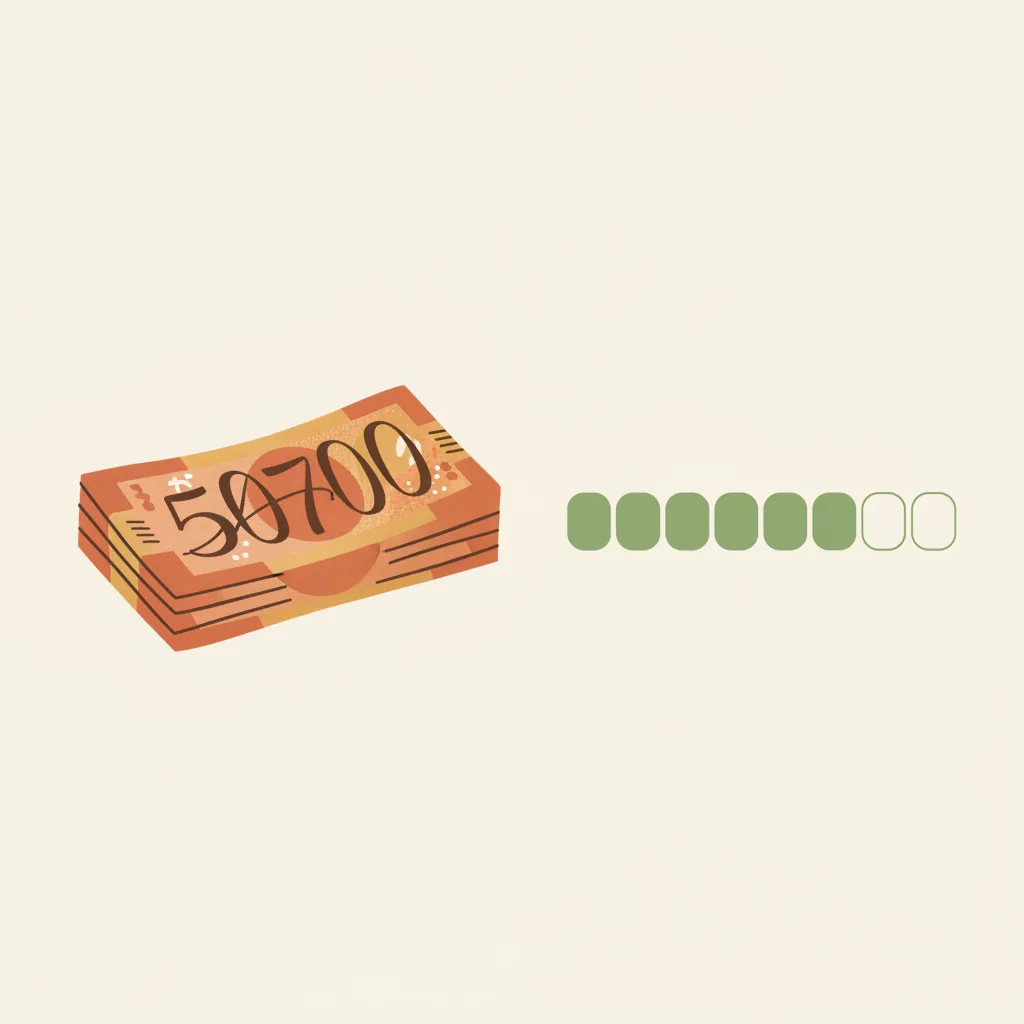
Tracking your progress against this exact plan is what Steady was built for. Set the $5,000 target, link your savings account, and watch the milestone bars fill up week by week. The visual progress is more motivating than any spreadsheet, and the auto-categorisation surfaces leaks before they undo your AP.

Written by Sam Wilson
Founder, Steady
Sam is a New Zealand founder building Steady, a personal finance app designed for Kiwis, integrated with every major NZ bank via Akahu. He writes about money, bank integrations, and what actually works for everyday New Zealanders.More about Sam
Steady connects your bank and tracks it all automatically, no spreadsheets. Join the waitlist for early access.
Suggested reads
More from the Steady blog
How to Actually Save Money in New Zealand (2026 Guide)
The average Kiwi household wastes $4,200/year on things they don't need. Here are 15 proven ways to save more in NZ, starting today. Refreshed April 2026.

Emergency Fund in NZ: How Much Do You Need? (2026)
68% of Kiwis couldn't cover a $1,000 emergency. Here's exactly how much YOUR emergency fund should be, and the fastest way to build it. Updated April 2026.

How to Set Financial Goals That You'll Actually Achieve
92% of financial goals fail. The three things the ones that work have in common, and how to set yours up the same way.
Ready to sort your money?
Steady connects to your NZ bank accounts and helps you track spending, set goals, and get AI-powered insights.
Try Steady free