Milford vs Simplicity vs Juno KiwiSaver (2026): Fees, Returns & Who Each Suits
Milford's returns vs Simplicity's 0.30% fees vs Juno's flat pricing, over 30 years the difference is six figures. Direct 2026 comparison of fees, 5-year returns, and who each provider actually suits.
The short version
- Returns are net of fees and tax, but tax depends on your PIR.
- Simplicity is the cheapest fee on this list, by a wide margin.
- Juno is "middle ground", actively managed, with a fee between Simplicity's index fund and Milford's premium product.
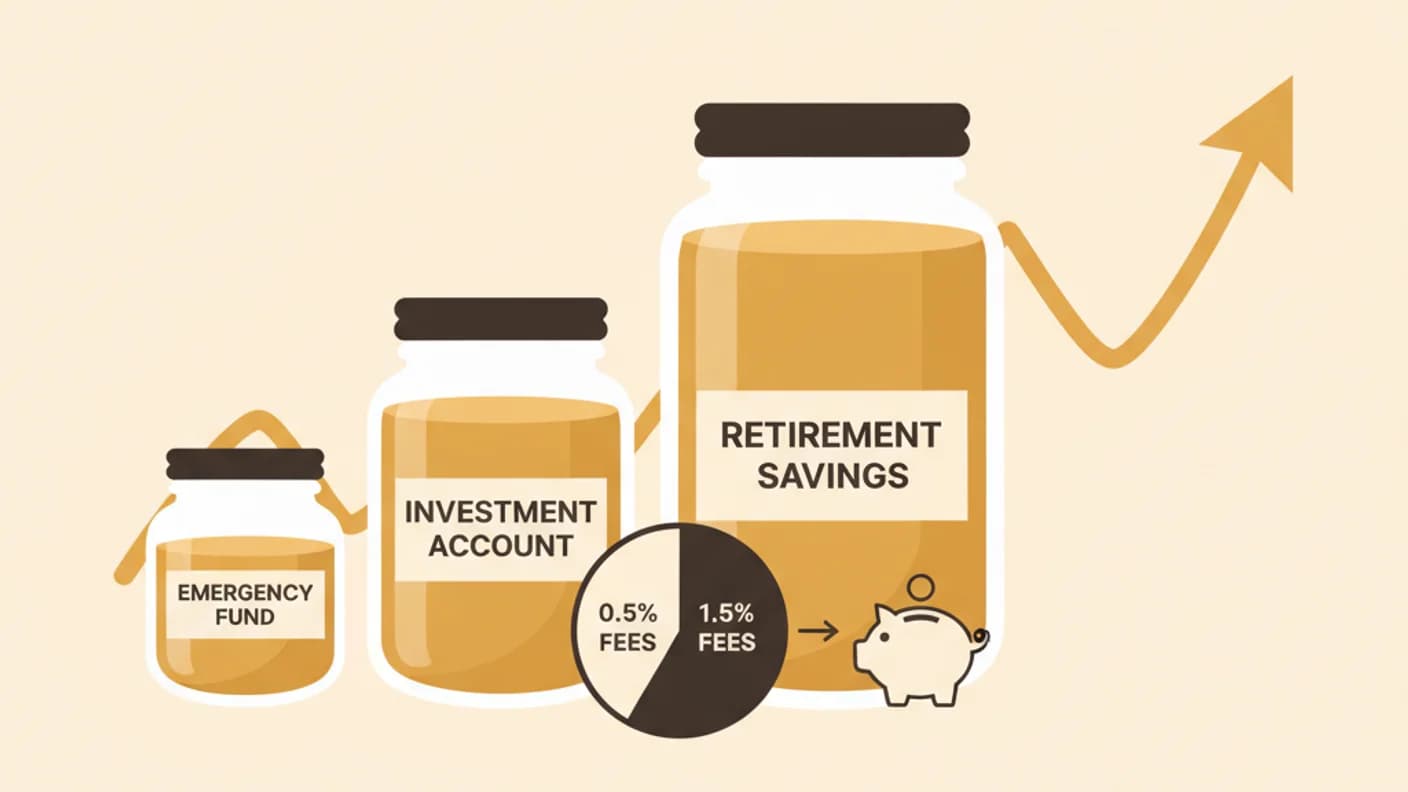
KiwiSaver fees are the difference between retiring comfortable and retiring early. A 0.50% fee gap on a $200k balance compounds to ~$140k over 30 years. Switching providers is free and takes 10 minutes online.
Here's how three of the most-mentioned non-bank providers stack up in June 2026.
Quick numbers
| Provider | Growth fund fee | Min balance | 5-yr return (Growth) |
|---|---|---|---|
| Simplicity Growth | 0.30% | $0 | ~9.2% p.a. |
| Milford Active Growth | 1.05% | $0 | ~10.4% p.a. |
| Juno Growth | 0.80% | $0 | ~9.8% p.a. |
Returns are net of fees and tax, but tax depends on your PIR. Use the official Sorted KiwiSaver Fund Finder for apples-to-apples comparison.
Simplicity (passive, cheap)
Simplicity is the cheapest fee on this list, by a wide margin. They run index funds (passive), the fund tracks the market rather than trying to beat it.
Pros: Lowest fees in NZ. Donates 15% of profits to charity. Solid long-term returns. Owned by Simplicity Trust.
Cons: No "active" stock-picking. In a falling market, you ride it down, there's no fund manager pulling the brake.
Best for: Long-term investors who believe markets generally go up, hate fees, and don't want to watch every day.
Milford (active, premium)
Milford is the active management option. Fund managers actively pick stocks and bonds. The fee is ~3.5× Simplicity's.
Pros: Strong long-term track record. Active managers can shift allocations in volatile markets.
Cons: Highest fee of the three. Past returns don't guarantee future, active funds globally underperform indices ~70% of the time over long periods.
Best for: Investors who want active management and accept the higher fee for the potential of outperformance.
Juno (active, mid-price)
Juno is "middle ground", actively managed, with a fee between Simplicity's index fund and Milford's premium product.
Pros: Active management at a friendlier fee. Strong communication and education content.
Cons: Shorter track record than Milford (founded 2018).
Best for: Investors who want active management without paying Milford-level fees.
The fee compound trap
Here's the math, assuming 8% gross returns over 30 years on $100/week contributions:
- 0.30% fee: ~$385k final balance.
- 0.80% fee: ~$340k final balance (-$45k).
- 1.05% fee: ~$320k final balance (-$65k).
Fees compound the wrong direction. Over a 40-year working life on bigger contributions, the gap easily hits six figures.
So which to pick?
- You're under 30, don't care about market noise, want maximum compounding: Simplicity Growth.
- You want active management and trust the manager: Milford Active Growth.
- You want active but at a lower price: Juno Growth.
For more than 90% of investors, the cheapest passive fund wins over long time horizons. That's why index investing dominates academic research.
Switching is free
Log into your existing provider, click "transfer to another provider", enter the new one's details. Takes 10 days. No fees. No "exit penalty."
What about Sharesies KiwiSaver?
Sharesies launched its KiwiSaver in 2023. As of 2026 it sits in similar territory to Juno on fees (~0.55%-0.85% depending on fund). Worth comparing if you already use Sharesies for general investing.
Where Steady fits
Connect your KiwiSaver to Steady via Akahu open banking and you'll see the balance + monthly growth alongside your bank accounts. Useful for tracking your full net worth as the KiwiSaver balance grows.
Disclaimer: General education only. Past performance doesn't predict future returns. Talk to a licensed financial adviser for personalised guidance.
Steady tip: Once a year, look up your current KiwiSaver's annual report and check the fund's expense ratio (the real all-in cost). Provider websites quote the management fee; the expense ratio is higher.

Written by Sam Wilson
Founder, Steady
Sam is a New Zealand founder building Steady, a personal finance app designed for Kiwis, integrated with every major NZ bank via Akahu. He writes about money, bank integrations, and what actually works for everyday New Zealanders.More about Sam
Steady connects your bank and tracks it all automatically, no spreadsheets. Join the waitlist for early access.
Suggested reads
More from the Steady blog

7 KiwiSaver Tips Every New Zealander Should Know in 2026
Most Kiwis are leaving free money on the table. 7 KiwiSaver mistakes costing you thousands, refreshed May 2026 with the latest contribution caps, government top-up, and FY26 fund-fee benchmarks.

KiwiSaver Fund Types Explained (Which One Should You Be In?)
Wrong KiwiSaver fund? It could cost you $100,000+ by retirement. Conservative vs balanced vs growth, which one is right for YOUR age.

KiwiSaver vs Savings Account: Where Should Your Money Go?
When to use KiwiSaver vs a savings account in NZ, the trade-offs between returns, access, and government incentives.
Ready to sort your money?
Steady connects to your NZ bank accounts and helps you track spending, set goals, and get AI-powered insights.
Try Steady free