Best KiwiSaver Fund NZ 2026: Top Funds by Fees & 5-Year Returns
The best KiwiSaver fund for most under-50s is a low-fee growth fund, Simplicity (0.31%), Kernel and InvestNow lead on fees; Milford leads 5-year returns. Ranked comparison + how to pick yours in 10 minutes.

Quick answer: For most Kiwis more than 10 years from needing the money, the best KiwiSaver fund is a low-fee growth fund — and your annual statement will tell you what you are actually in — Simplicity Growth (0.31% fees) is the value benchmark, Kernel and InvestNow Foundation compete on cost, and Milford Active Growth has led 5-year returns, with higher fees.
Buying a first home soon, or retiring within 5 years? A balanced or conservative fund fits better. How to pick yours in 10 minutes.
Kia ora. Search "best KiwiSaver fund NZ" and you'll get a hundred different answers, because there genuinely isn't one. The "best" fund for a 24-year-old saving for retirement is the wrong fund for someone buying their first home next year.
So instead of naming one winner, this guide shows you how to actually choose, the fund type first, then the provider. That's the order that matters.
Step 1: Pick your fund type (this is 90% of the decision)
KiwiSaver funds come in five broad flavours, from least to most aggressive: Defensive, Conservative, Balanced, Growth, and Aggressive. The difference is how much sits in "growth assets" (shares and property) versus "income assets" (cash and bonds).
More growth assets = bigger ups and downs year to year, but higher returns over the long run. The single biggest mistake Kiwis make is being in a fund that's too conservative for their timeframe, and quietly losing tens of thousands by retirement.
Step 2: Match the fund type to your timeframe
The rule of thumb most NZ advisers use:
- Need the money in under 3 years (e.g. first-home deposit soon): Defensive or Conservative. You can't afford a market dip right before you withdraw.
- 3–10 years away: Balanced.
- 10+ years away (most people under ~50 saving for retirement): Growth or Aggressive. You have time to ride out the dips.
Steady tip: Not sure how long until you need it? Work backwards from the goal, not your age. A 30-year-old buying a house in 18 months should be conservative for that money, even though retirement is decades off. Steady shows your KiwiSaver next to your other accounts so the timeframe is obvious, join the waitlist to get early access.
Step 3: Then pick a provider
Once you know your fund type, then compare providers on the things that actually differ: fees, long-term returns for that fund type, and whether they're a low-cost index manager or active manager. We compare three popular ones in detail in Simplicity vs Milford vs Juno.
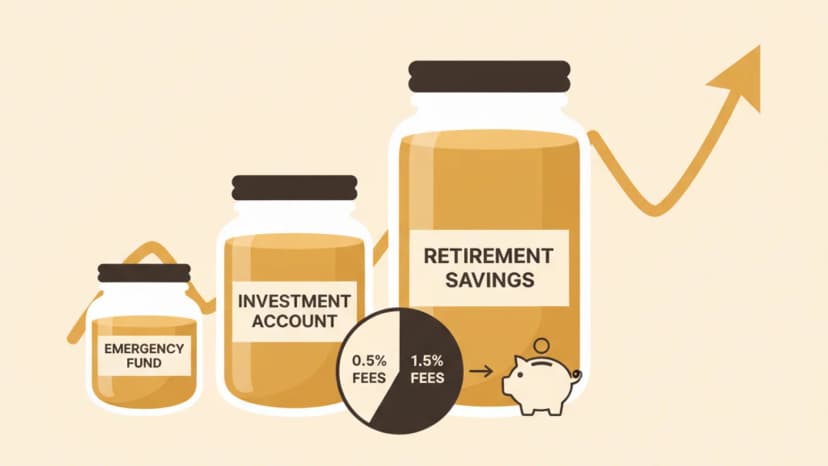
Fees matter more than they look. A 1% higher annual fee doesn't sound like much, but compounded over 30 years it can cost you a six-figure chunk of your final balance.
Step 4: Claim the free money first
Before you obsess over fund choice, make sure you're getting the government contribution (up to $260.72/year if you contribute at least $1,042.86) and your employer's 3%. That's free money that dwarfs the difference between most funds in your early years. More in our KiwiSaver tips for 2026.
The bottom line
There's no universal "best" KiwiSaver fund. Get the type right for your timeframe, claim every dollar of free money, then pick a low-fee provider for that type. Do those three things and you'll beat most Kiwis without ever needing a financial adviser.
Steady tip: Steady tracks your KiwiSaver balance alongside your bank and projects what it's worth at retirement based on your current fund, so "am I in the right fund?" stops being a guess. Join the waitlist to be one of the first Kiwis on it.

Written by Sam Wilson
Founder, Steady
Sam is a New Zealand founder building Steady, a personal finance app designed for Kiwis, integrated with every major NZ bank via Akahu. He writes about money, bank integrations, and what actually works for everyday New Zealanders.More about Sam
Steady connects your bank and tracks it all automatically, no spreadsheets. Join the waitlist for early access.
Suggested reads
More from the Steady blog

KiwiSaver Fund Types Explained (Which One Should You Be In?)
Wrong KiwiSaver fund? It could cost you $100,000+ by retirement. Conservative vs balanced vs growth, which one is right for YOUR age.

7 KiwiSaver Tips Every New Zealander Should Know in 2026
Most Kiwis are leaving free money on the table. 7 KiwiSaver mistakes costing you thousands, refreshed May 2026 with the latest contribution caps, government top-up, and FY26 fund-fee benchmarks.
Milford vs Simplicity vs Juno KiwiSaver (2026): Fees, Returns & Who Each Suits
Milford's returns vs Simplicity's 0.30% fees vs Juno's flat pricing, over 30 years the difference is six figures. Direct 2026 comparison of fees, 5-year returns, and who each provider actually suits.
Ready to sort your money?
Steady connects to your NZ bank accounts and helps you track spending, set goals, and get AI-powered insights.
Try Steady free