How Much Should I Have in Savings? (By Age, NZ 2026)
How much you should have saved by 25, 30, 40 and 50 in NZ, realistic benchmarks in NZD, not the American '1x your salary' rules. Plus how to work out your own target.
The short version
- These are guides, not gospel, they assume a middle income and no major windfalls or setbacks.
- Your emergency fund should be easy to reach, a high-interest savings account, not locked in a term deposit.
- Not for this. It is retirement money, and you cannot reach it.
Kia ora. If you've googled "how much should I have in savings," you've probably hit a wall of American advice telling you to have "1x your salary saved by 30." Useful if you earn US dollars. Less useful staring down NZ rent, a student loan, and a house deposit that keeps moving. Here are realistic Kiwi benchmarks.
The short version
- There's no single right number, it depends on your income, costs, and goals.
- A useful first target is 3 months of essential expenses as an emergency fund, then build from there.
- Rough by-age guides help, but your own "3–6 months of costs + goal savings" number matters more than any average.
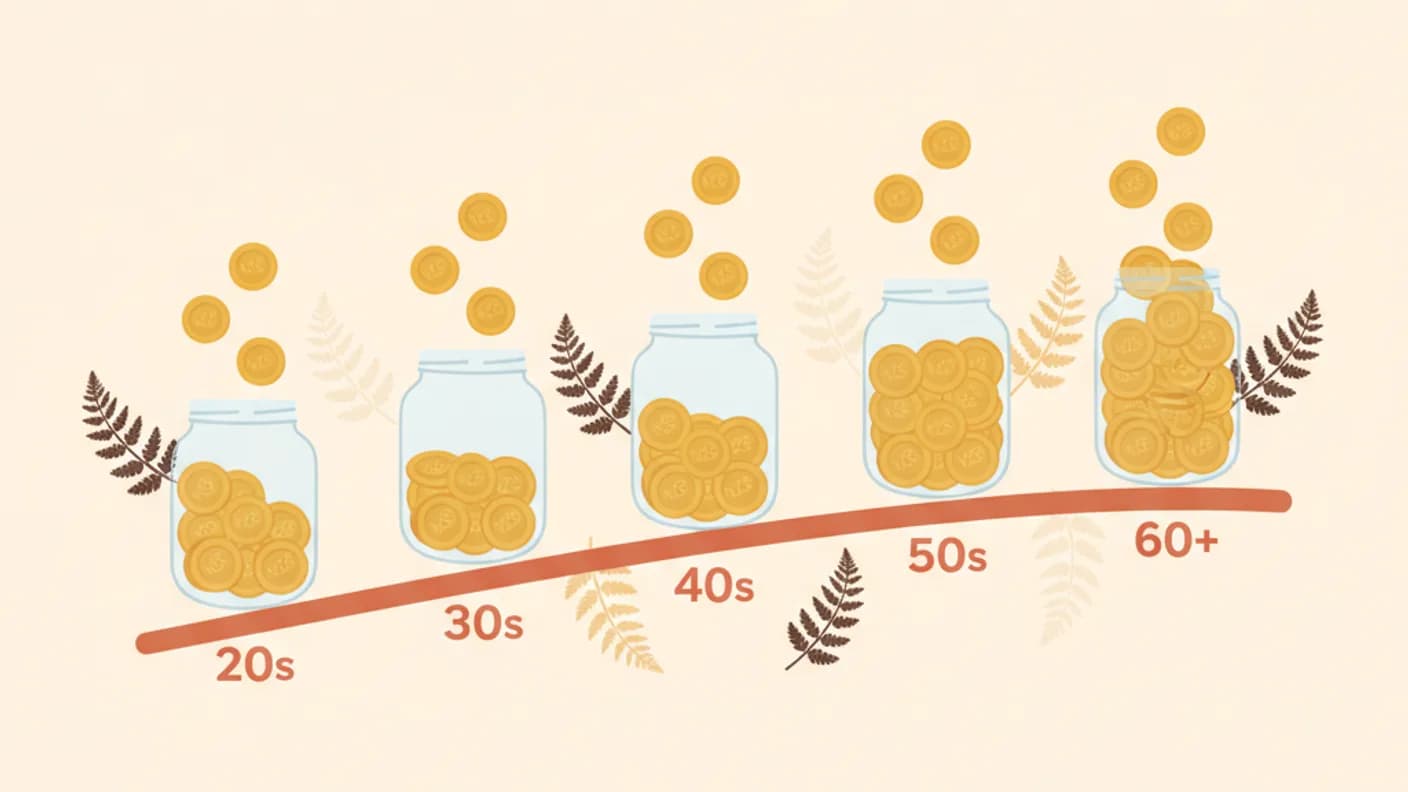
Rough savings benchmarks by age (NZ)
These are guides, not gospel, they assume a middle income and no major windfalls or setbacks.
| Age | Reasonable savings target | What it's really for |
|---|---|---|
| 25 | 1–3 months of expenses | A starter emergency buffer |
| 30 | 3–6 months of expenses + deposit savings | Emergency fund + first-home progress |
| 40 | 6+ months + growing KiwiSaver | Security + retirement momentum |
| 50 | 6–12 months + serious retirement balance | Runway + retirement on track |
Don't panic if you're behind these, most people are, and the number that matters is the one you set for yourself.
Steady tip: The honest benchmark is "how many months could I cover if my income stopped?" Steady works that out from your real spending, so you know exactly where you stand. Join the waitlist for early access.
How to set your own target
- Emergency fund first: add up your essential monthly costs (rent, power, food, transport) and multiply by 3. That's your minimum buffer. See building an emergency fund in NZ.
- Then goal savings: a house deposit, a car, a trip, save toward these separately so you're not raiding your buffer.
- Then invest the rest: once your buffer's set and short-term goals are funded, longer-term money is better invested or in KiwiSaver than sitting in cash.
Where to keep it
Your emergency fund should be easy to reach, a high-interest savings account, not locked in a term deposit. Money you won't need for a year+ can earn more in a term deposit.
Does my KiwiSaver count as savings?
Not for this. It is retirement money, and you cannot reach it.
The exceptions are narrow: a first home, turning 65, serious illness, or significant financial hardship. None of them covers a car repair or a month between jobs, which is what an emergency fund is for.
Count it toward retirement and toward a deposit if you are buying. Count it out of your buffer entirely.
How much should I put aside each payday?
Start with an amount that survives a bad fortnight, not an ambitious one.
Somewhere between 5% and 10% of take-home pay is a reasonable opening position, and the exact figure matters far less than it going out automatically on payday. A transfer you have to remember is a transfer you will skip.
Raise it when your pay rises. Half of any increase into savings is painless, because you never adjusted to the money.
Should I keep my savings in one account or several?
Several, once you are saving for more than one thing.
One pot means the holiday and the emergency fund are the same money, and the holiday always wins. Separate accounts, or named goals inside an app, keep the buffer from quietly funding something fun.
Two is usually enough to start: the buffer, and everything else.
Should I save while I still have debt?
Both, in that order and at that size: a small buffer first, then the debt, then serious saving.
Without a buffer the next unexpected bill goes straight back on the card, so the balance never actually falls. A few hundred dollars set aside breaks that cycle.
After that, any debt charging more than a savings account pays is costing you money to hold. Clear the expensive debt before building the buffer beyond a starter amount.
The bottom line
Ignore the US "1x salary" rules. Aim for 3–6 months of expenses as a buffer, then save toward specific goals, then invest the rest. Your own number beats any average.
Steady tip: Steady tracks your savings, goals and buffer in one place so "how much have I actually got?" is never a mystery. Join the waitlist.

Written by Sam Wilson
Founder, Steady
Sam is a New Zealand founder building Steady, a personal finance app designed for Kiwis, integrated with every major NZ bank via Akahu. He writes about money, bank integrations, and what actually works for everyday New Zealanders.More about Sam
Steady connects your bank and tracks it all automatically, no spreadsheets. Join the waitlist for early access.
Suggested reads
More from the Steady blog
How Much Should I Have Saved by 30 in NZ? (2026)
The internet says "1× your salary by 30." What actually works for Kiwis in 2026? Real benchmarks by age, how much Kiwis your age really have, and how to catch up fast if you're behind.

Emergency Fund in NZ: How Much Do You Need? (2026)
68% of Kiwis couldn't cover a $1,000 emergency. Here's exactly how much YOUR emergency fund should be, and the fastest way to build it. Updated April 2026.
Best Savings Accounts in NZ (2026 Comparison)
Your savings account is probably paying 0.05%. These NZ accounts pay 10-50x more, updated rates from every major bank for 2026.
Ready to sort your money?
Steady connects to your NZ bank accounts and helps you track spending, set goals, and get AI-powered insights.
Try Steady free