Mortgage Fixed vs Floating in NZ (2026): The Real Trade-off
Fixed locks your rate, floating moves with the OCR. In a falling-rate environment like 2026, which makes more sense? A practical guide to splitting, breaking, and the small print Kiwis miss.
The short version
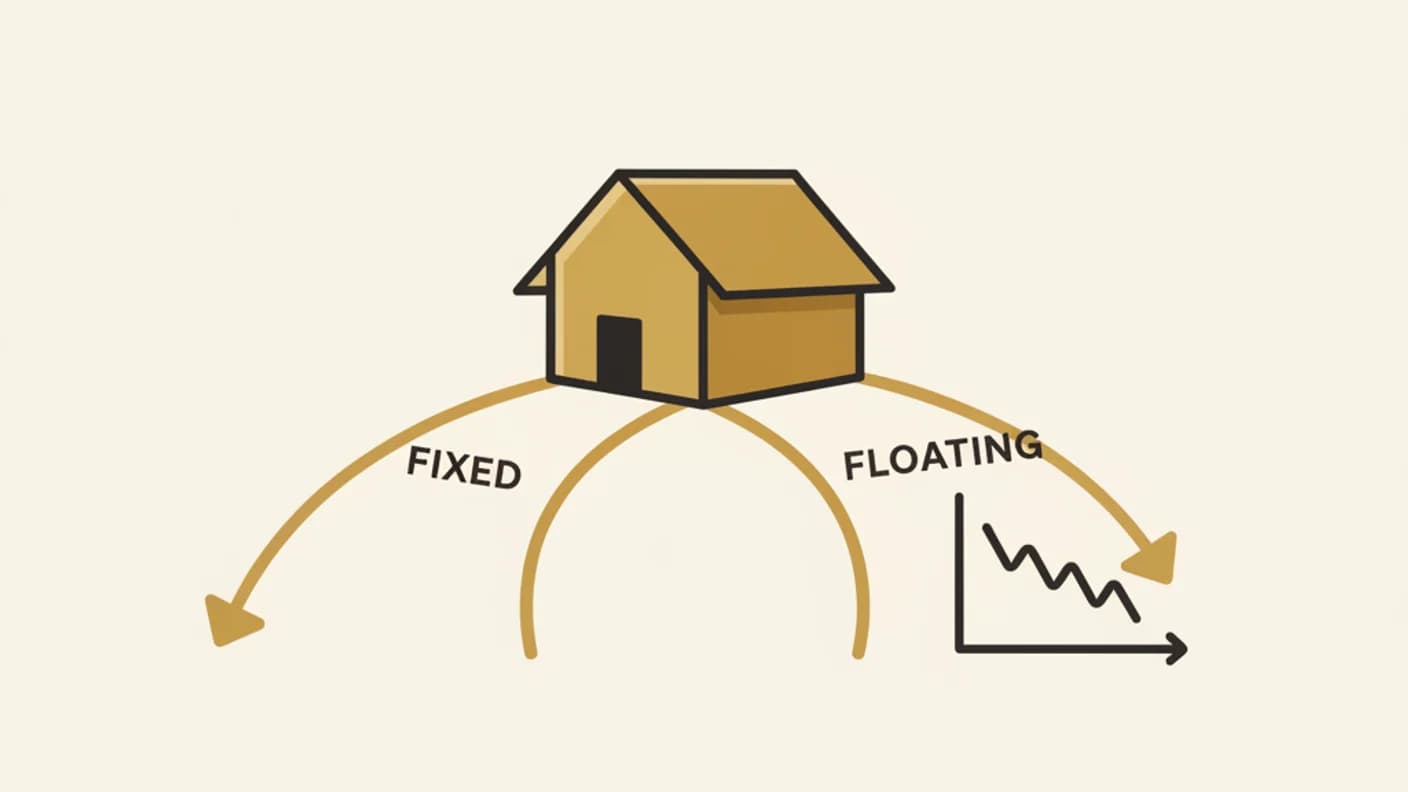
- Fixed: You agree a rate for a set term (6 months to 5 years).
- When this was written, most NZ economists expected 1-2 more OCR cuts in 2026.
- A 6-month or 1-year fix lets you lock today's rate while keeping near-term optionality.
Correction, 15 September 2026. The OCR has turned. After the cuts described below it bottomed and was raised to 2.50% in July and 2.75% on 2 September 2026 (RBNZ). The fixed-versus-floating reasoning here is unchanged, but it now points the other way: floating is exposed to rises rather than falls.
The Reserve Bank of New Zealand cut the OCR three times between November 2025 and May 2026, dropping it from 5.25% to 3.25%. Floating mortgage rates followed, most banks now sit around 6.00% floating vs 5.95–5.99% on a 1-year fixed.
That tiny gap is the whole question: lock in for certainty, or stay floating and ride further cuts down?
How they actually work
Fixed: You agree a rate for a set term (6 months to 5 years). The payment doesn't move. If rates fall, you don't benefit. If rates rise, you're insulated. Breaking a fixed rate early triggers a break fee that can run into thousands.
Floating: Rate moves with the bank's floating reference rate, which tracks the OCR loosely. You can repay extra any time, swap to fixed any time, and there's no break fee — which is the whole basis of paying a mortgage off faster.
The 2026 case for floating
When this was written, most NZ economists expected 1-2 more OCR cuts in 2026. The opposite happened. The OCR bottomed and was raised in July and again on 2 September 2026, to 2.75%. Floating rates rise with it, so the old expectation of another 0.25-0.50% of drift downward no longer holds.
Floating downsides:
- You pay ~0.05% more today than the 1-year fixed.
- The bank can lift the floating rate at any time without warning.
- Your payment changes every cut, annoying for budget tracking.
The 2026 case for fixing (short)
A 6-month or 1-year fix lets you lock today's rate while keeping near-term optionality. If rates fall, you re-fix lower in 6-12 months. If they rise (unlikely but possible), you're protected.
Most NZ mortgage brokers in 2026 are recommending 6-month or 1-year fixed over longer terms, the curve says short.
Don't fix long (2-5 years) right now
Locking in 3-5 years at ~6% in a falling-rate environment is the worst of both worlds: you pay above market, and you can't get out without a five-figure break fee.
The split-loan trick
Most NZ banks will split your mortgage into multiple tranches, say 60% on a 1-year fixed and 40% floating. On mid-September 2026 carded rates that is roughly 4.6% fixed against 6.2% floating. This means:
- Most of your payment is stable.
- A meaningful chunk benefits from future OCR cuts.
- You can pay extra on the floating slice without break fees.
For a $500k mortgage, this is the default move for most Kiwis right now.
Break fees: read this before you fix
If you fix and then need to break (selling the house, refinancing, lump-sum repayment), the bank charges the lost interest they would have earned vs current rates.
In a falling-rate market, break fees get LARGE, because the gap between your fixed rate and the current rate widens. A $500k loan fixed at 5.95% with 2 years to run, broken when rates have dropped to 4.50%, can cost $12,000+.
Rule of thumb: if there's any chance you'll sell or refinance, keep at least 30% floating.
Should I fix or float right now?
With the OCR rising again, the case for floating on the whole loan has weakened considerably.
Floating is exposed to every increase, immediately and without notice. Fixing buys certainty at a price, and a short fix buys certainty without committing you to a rate for years.
The split remains the sensible middle: most of the loan fixed so the payment is predictable, a slice floating so you can overpay it freely. What has changed is the reason for the floating slice. It is flexibility now, not a bet on cuts.
How long should I fix for?
Long enough to cover the period you need to be certain about, and no longer.
A six-month or one-year fix keeps your options open and lets you re-price soon. A three to five year fix protects you from rises and locks you out of falls, and breaking it early is the expensive part rather than the rate itself.
The honest question is not where rates are going. It is how much a wrong guess would cost you, and whether you could absorb it.
What is a break fee and how is it calculated?
It is the lender recovering the interest they expected to earn and now will not.
The size depends on the gap between your fixed rate and the rate available for the remaining term, multiplied by the balance and the time left. A small gap is a small fee. A large one on a big balance with years to run can reach five figures.
It is not a penalty and it is not negotiable. Ask for a quote before you commit to anything that might require breaking.
Can I split my mortgage between fixed and floating?
Yes, and most New Zealand lenders will do it without fuss.
You choose how much sits in each portion, and you can have more than one fixed tranche with different end dates. Staggering those dates means you never re-price the whole loan on a single day.
The floating portion is where extra repayments belong, because there is no limit and no break cost on it.
What Steady can do
Once your mortgage is set up, log it as a Liability in Steady. You'll see:
- Monthly interest cost line-itemed in your spending.
- Forecasts that include the next rate-change date.
- Goal-progress tracking if you're paying down extra.
Disclaimer: This is general education, not personalised financial advice. Run any specific scenario past a licensed Financial Advice Provider before signing.
Steady tip: Track every rate-change letter your bank sends, over a 30-year mortgage the small movements compound to tens of thousands. A 0.25% saved on $500k = $1,250/year forever.

Written by Sam Wilson
Founder, Steady
Sam is a New Zealand founder building Steady, a personal finance app designed for Kiwis, integrated with every major NZ bank via Akahu. He writes about money, bank integrations, and what actually works for everyday New Zealanders.More about Sam
Steady connects your bank and tracks it all automatically, no spreadsheets. Join the waitlist for early access.
Suggested reads
More from the Steady blog
OCR Cuts in 2026: What They Mean for Your Mortgage and Savings
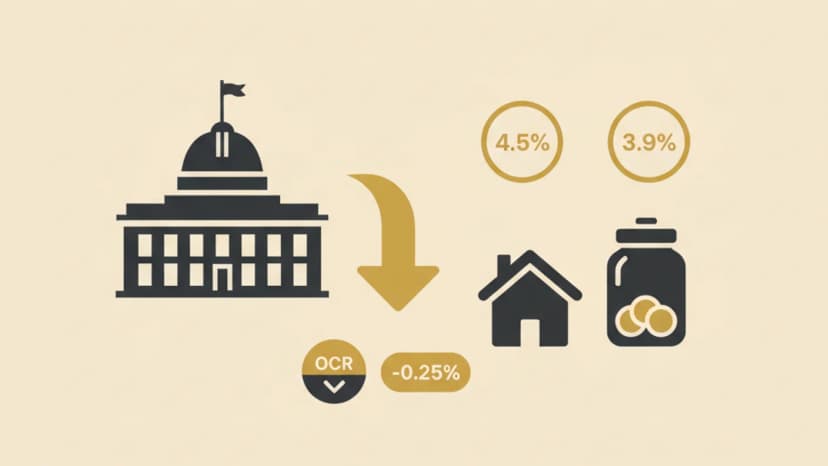
The OCR fell through early 2026, bottomed, and has since been RAISED twice to 2.75%. Here is what the turn means for your mortgage repayments and your savings interest.

ANZ vs ASB vs Kiwibank: Which Is the Best NZ Bank in 2026?
ANZ Go, ASB Streamline and Kiwibank Free Up all cost $0 a month in 2026. A fee-by-fee comparison of the big three, checked against each bank's published schedule.

How to Save for Your First Home in NZ (2026 Guide)
NZ house deposit in 2026: you need $120k (or less with these tricks). KiwiSaver withdrawal, what replaced the First Home Grant, and the exact savings plan.
Ready to sort your money?
Steady connects to your NZ bank accounts and helps you track spending, set goals, and get AI-powered insights.
Try Steady free