Credit Scores in NZ: How to Check Yours Free (2026)
Checking your NZ credit score is free, here's exactly how, what the numbers mean, and the surprising things that don't actually hurt your score. Plus: when it really matters.
The short version
- New Zealand has three main credit reporting agencies: Centrix, Equifax (formerly Veda), and illion.
- If you're not applying for credit, your score is just a number.
Your credit score is one of those things everyone mentions but few Kiwis actually understand. Is it a number? A grade? Does buying a coffee on credit card affect it? Let's clear it up. (For the basics of managing your money, start with our NZ budgeting guide.)
How credit scores work in NZ
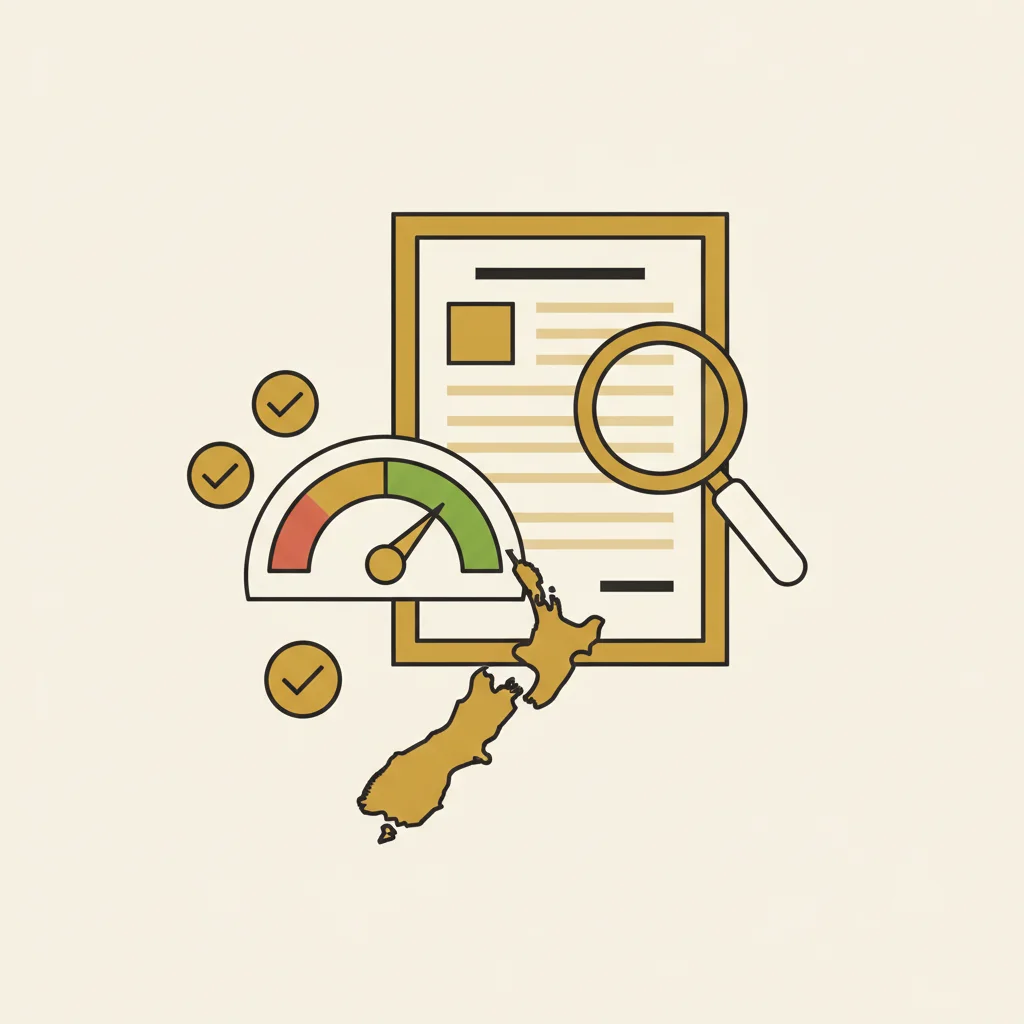
New Zealand has three main credit reporting agencies: Centrix, Equifax (formerly Veda), and illion. Each one calculates your score slightly differently, but they all look at the same basic information.
Your credit score is a number, typically between 0 and 1,000 (Centrix and Equifax) or 0 and 1,200 (illion). Higher is better. Most Kiwis sit somewhere between 500 and 800.
Important: NZ credit scoring is simpler than the US system. We don't have FICO scores, and credit culture here is less intense. Your score matters, but it's not the be-all and end-all.
What goes into your score
Positive factors
- Paying bills on time, this is the biggest factor
- Length of credit history, longer is better
- Low credit utilisation, using less of your available credit limit
- Stable address and employment, consistency signals reliability
- Successfully repaid loans, completed personal loans, car finance
Negative factors
- Late payments, even one missed payment can drop your score significantly
- Defaults, unpaid debts that go to collections
- Multiple credit applications, applying for lots of credit in a short period
- Court judgments, any financial judgments against you
- Bankruptcy, stays on your record for 4 years after discharge
Things that DON'T affect your score
- Your income, credit agencies don't know what you earn
- Your savings balance, they can't see your bank accounts
- Using your debit card, only credit accounts are tracked
- Checking your own score, this is a "soft inquiry" and doesn't count
When your credit score matters
Your score is checked when you:
- Apply for a mortgage
- Apply for a personal loan
- Sign up for a credit card
- Apply for hire purchase or car finance
- Sometimes when signing up for a phone plan or power company
For day-to-day money management, your credit score is largely irrelevant. It doesn't affect your ability to open a bank account, use a debit card, or save money.
When it doesn't matter
If you're not applying for credit, your score is just a number. You don't need to obsess over it. Focus on the basics:
- Pay your bills on time
- Don't take on debt you can't comfortably repay
- Don't apply for credit you don't need
These habits naturally build a good credit score without you needing to game the system.
How to check your score for free
All three NZ credit agencies offer free credit reports:
- Centrix, free report at mycreditfile.co.nz
- Equifax, free report at equifax.co.nz/personal/products/my-equifax
- illion, free report at checkyourcredit.co.nz
You're entitled to request a free copy of your credit report from each agency. It's worth checking at least once a year to make sure there are no errors or unexpected entries.
Common mistakes Kiwis make
Applying for too many credit cards
Each application generates a "hard inquiry" on your report. Multiple inquiries in a short period suggest financial stress to lenders. Only apply for credit you actually need.
Ignoring small debts
That $50 phone bill you forgot about can go to collections and tank your score. Set up automatic payments for recurring bills.
Closing old credit accounts
Your oldest credit account contributes to your "length of credit history." Closing a card you've had for 10 years can actually reduce your score. If it has no annual fee, consider keeping it open.
Not checking for errors
Credit reports can contain mistakes, wrong addresses, debts that aren't yours, payments incorrectly marked as late. Check your report and dispute anything that's wrong.
How to improve your score
If your score needs work, here's what actually helps:
Quick wins (1-3 months):
- Set up automatic payments for all bills
- Pay down credit card balances below 30% of the limit
- Fix any errors on your credit report
Medium term (6-12 months):
- Maintain consistent on-time payments
- Avoid new credit applications
- Reduce overall debt
Long term (1-2 years):
- Build a longer credit history
- Maintain low credit utilisation
- Keep old accounts open
The NZ perspective
New Zealand's credit system is more forgiving than many countries. Negative information typically falls off your report after 5 years (except bankruptcy, which is 4 years after discharge). And unlike the US, we don't need a credit score to rent an apartment or get a job.
The best approach for most Kiwis: pay your bills on time, don't over-borrow, and check your report once a year. That's genuinely all you need to do. Check our glossary for more financial terms explained simply.
Steady tip: While Steady doesn't track your credit score directly, keeping on top of your recurring bills and spending helps you avoid the late payments that damage your score. The bills section shows all your upcoming payments so nothing slips through the cracks.
Frequently Asked Questions
How do I check my credit score in New Zealand?
You can check it free at Centrix (centrix.co.nz) or Equifax NZ (equifax.co.nz). Both let you view your report once per year at no cost. Checking your own score doesn't affect it, only "hard inquiries" from credit applications do.
What's a good credit score in NZ?
NZ scores range 0-1000. Above 700 is generally considered good; above 800 is excellent. Below 500 typically means you'll struggle with mainstream credit and may face higher rates if approved at all.
Does buy now pay later (BNPL) affect my credit score?
Yes, in 2026 BNPL usage is reported to NZ credit agencies. Multiple active BNPL accounts can reduce your borrowing capacity and may show up when mortgage lenders assess your application. Close BNPL accounts well before applying for a mortgage.
How long do bad credit events stay on my NZ credit report?
Defaults stay 5 years from when they're listed. Bankruptcies stay 4 years from discharge. Hard inquiries stay 5 years but their impact fades after 12 months. Most everyday account information rolls off after 24 months.
Can I improve my credit score quickly?
Most improvements take 3-6 months to show up. The fastest wins: pay down credit card balances below 30% of the limit, dispute any errors on your report, avoid new credit applications, and ensure all bills (especially power and phone) are paid on time.

Written by Sam Wilson
Founder, Steady
Sam is a New Zealand founder building Steady, a personal finance app designed for Kiwis, integrated with every major NZ bank via Akahu. He writes about money, bank integrations, and what actually works for everyday New Zealanders.More about Sam
Steady connects your bank and tracks it all automatically, no spreadsheets. Join the waitlist for early access.
Suggested reads
More from the Steady blog
How to Start Budgeting in NZ: Beginner's Guide (2026)
Forget spreadsheets. This 10-minute guide gets you a working budget that actually fits NZ pay cycles, fortnightly or weekly. Free template inside.
Best Savings Accounts in NZ (2026 Comparison)
Your savings account is probably paying 0.05%. These NZ accounts pay 10-50x more, updated rates from every major bank for 2026.

Is Steady Safe? How We Protect Your Financial Data
"Is it safe to connect my bank?", the #1 question we get. Here's exactly how Steady protects your data (AES-256, NZ Privacy Act, read-only).
Ready to sort your money?
Steady connects to your NZ bank accounts and helps you track spending, set goals, and get AI-powered insights.
Try Steady free