How Much House Can I Afford in NZ? (2026 Calculator + Rules)
Banks use 6x income as a rough ceiling, but the test rate they apply is closer to 7.5%. Here's the realistic affordability picture for NZ buyers in 2026, with worked examples for $80k, $120k, and $200k household incomes.
The short version
- Servicing test: At 7.5% test rate over 30 years, $480k = ~$3,357/month. After tax, $80k = ~$5,200/month net. Repayments would be 65% of take-home → fails.
- What passes: ~$380k loan = ~$2,660/month (51%), still tight. A bank might approve $300-350k.
- Servicing test: $720k at 7.5% = $5,036/month. Net income ~$7,300/month. Repayments 69% → fails.
- What passes: ~$550k loan = $3,847/month (53%). Bank likely approves $500-550k.
"How much house can I afford?" is the most-Googled NZ mortgage question. The honest answer: it depends on your income, your deposit, and the test rate the bank applies to your application.
Here's how banks actually calculate it in 2026, with three worked examples.
The 3 limits
Banks check three things before approving a mortgage:
- Income multiple, typically 5.5-6.5× gross household income for a standard application.
- Servicing test, your repayments at a stressed rate (around 7.5% in 2026, even though actual rates are ~6.00%) must be under ~40% of net income.
- Loan-to-Value Ratio (LVR), RBNZ requires 80% LVR for most owner-occupied buyers, meaning a 20% deposit. First-home buyers can sometimes get 90% LVR via the First Home Loan scheme.
The tightest of the three is your real ceiling.
Worked example: $80k household income
- Income multiple (6×): $480k loan max.
- Servicing test: At 7.5% test rate over 30 years, $480k = ~$3,357/month. After tax, $80k = ~$5,200/month net. Repayments would be 65% of take-home → fails.
- What passes: ~$380k loan = ~$2,660/month (51%), still tight. A bank might approve $300-350k.
- Plus 20% deposit: house price ceiling ~$430-440k.
Worked example: $120k household income
- Income multiple (6×): $720k max.
- Servicing test: $720k at 7.5% = $5,036/month. Net income ~$7,300/month. Repayments 69% → fails.
- What passes: ~$550k loan = $3,847/month (53%). Bank likely approves $500-550k.
- Plus 20% deposit: house price ceiling ~$690k.
Worked example: $200k household income
- Income multiple (6×): $1.2m max, and the servicing test usually passes at this ratio because higher incomes have proportionally more discretionary money.
- What passes: Typically the full 6× applies. Loan ceiling ~$1.2m.
- Plus 20% deposit: house price ceiling ~$1.5m.
What the bank doesn't include
The 7.5% test rate is for the mortgage. It does NOT account for:
- Rates (~$3-5k/year)
- Insurance (~$2-3k/year)
- Maintenance (~1% of house value/year)
- Body corp fees (apartments)
Add ~$8-12k/year in "house running costs" before deciding if the bank's max is your actual max.
The realistic budget
A good rule for first-home buyers: target a mortgage repayment of 30-35% of net household income, not the 40% the bank will allow. That leaves room for the running costs above without strangling everything else.
For a $120k household income, that's ~$2,200/month repayment → ~$330k loan → ~$410k house with a 20% deposit.
Less ambitious than the bank's max. More sustainable.
Boosting your number
- Bigger deposit: Each extra $20k deposit means $20k less mortgage = ~$140/month freed up.
- Pay down other debt first: Banks subtract credit card limits and personal loan repayments from your servicing capacity.
- Two incomes counted: Make sure both partners' income is on the application, even part-time work counts.
- KiwiSaver withdrawal: First-home buyers can withdraw their KiwiSaver (minus $1k minimum) toward the deposit.
Why does the bank test me at a rate I am not paying?
Because they are lending for thirty years and pricing the years you cannot see.
The rate you sign today lasts a year or two. The loan lasts decades, and somewhere in those decades rates will be higher than they are now. The servicing test asks whether you would still make the payments then.
It is the least popular part of a mortgage application and the one most likely to have saved somebody from a forced sale. Treat the stressed number as the real number and the current one as a discount.
What deposit do I actually need?
Twenty percent is the standard answer, and there are two real routes below it.
Banks keep a limited allowance for lending above 80% to owner-occupiers, which is where a 10% deposit sometimes gets approved, usually with a low-equity margin added to the rate. The First Home Loan scheme goes lower again for buyers who meet its income and price caps.
The smaller the deposit, the more the loan costs per dollar borrowed. That is the trade, and it is worth pricing rather than assuming.
Does my credit card affect how much I can borrow?
Yes, and it is the limit that counts, not the balance.
A card with a $10,000 limit is assessed as though it is fully drawn, because it could be tomorrow. The same goes for an unused overdraft and an open buy-now-pay-later account.
Reducing or closing limits you do not use is the fastest way to lift a borrowing figure without earning another dollar. Do it a month or two before you apply so the change is on record.
Can I use my KiwiSaver for the deposit?
If it is your first home and you have been contributing for at least three years, yes, and it is the largest single lever most first-home buyers have.
You can withdraw almost the whole balance, leaving a small minimum in the account. The money goes to your solicitor for settlement rather than to you.
Apply early. Providers need notice, and a withdrawal that arrives after settlement day helps nobody.
Where Steady fits
Track your deposit savings in Steady as a goal. The forecast tells you the realistic month you'll cross the threshold, based on your actual saving pace, not what you hope you'll save.
Disclaimer: General education. Run your specific scenario past a licensed mortgage adviser before house-hunting.
Steady tip: Once you're approved, set up a separate "house running" budget in Steady covering rates, insurance, maintenance. The 1st-year shock is real, and a buffer category absorbs it.

Written by Sam Wilson
Founder, Steady
Sam is a New Zealand founder building Steady, a personal finance app designed for Kiwis, integrated with every major NZ bank via Akahu. He writes about money, bank integrations, and what actually works for everyday New Zealanders.More about Sam
Steady connects your bank and tracks it all automatically, no spreadsheets. Join the waitlist for early access.
Suggested reads
More from the Steady blog

How to Save for Your First Home in NZ (2026 Guide)
NZ house deposit in 2026: you need $120k (or less with these tricks). KiwiSaver withdrawal, what replaced the First Home Grant, and the exact savings plan.
Mortgage Fixed vs Floating in NZ (2026): The Real Trade-off
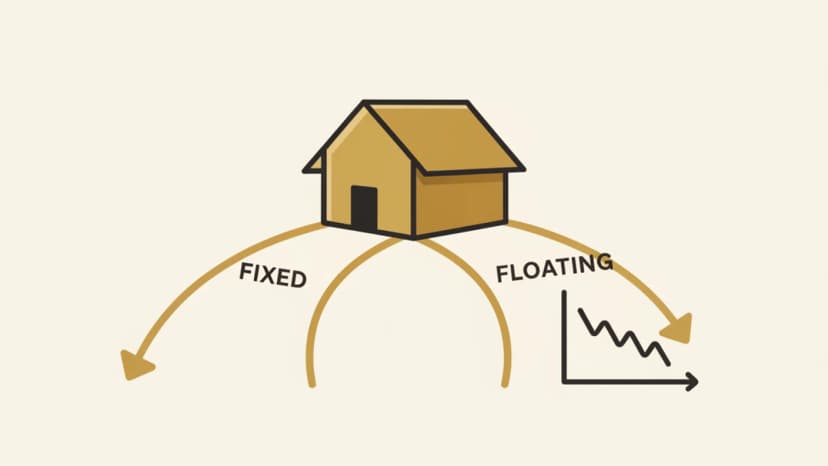
Fixed locks your rate, floating moves with the OCR. In a falling-rate environment like 2026, which makes more sense? A practical guide to splitting, breaking, and the small print Kiwis miss.

First Home Grant vs First Home Loan in NZ (2026)
Two different government schemes for first-home buyers, often confused. The First Home Grant closed in May 2024; the First Home Loan still lets you buy with a 5% deposit. A side-by-side for 2026.
Ready to sort your money?
Steady connects to your NZ bank accounts and helps you track spending, set goals, and get AI-powered insights.
Try Steady free