How to Switch Power Companies in NZ (Save $200-400/Year)
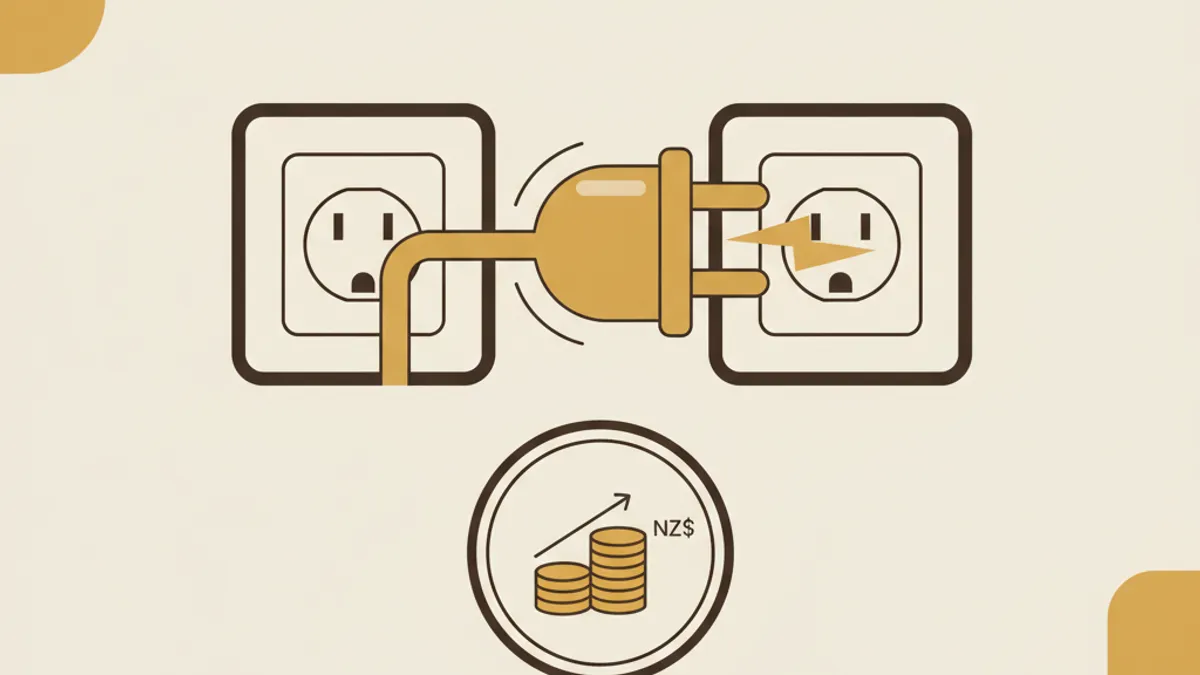
NZ households overpay $300-800/year on power. Switching takes 10 minutes and costs nothing. Here's exactly how (with the free govt tool).
The short version
- Go to powerswitch.org.nz, it's run by Consumer NZ and the Electricity Authority.
- If you use less than 8,000 kWh/year (small household, efficient home), a low-user plan with a lower daily charge might save you money.
Most New Zealanders are paying too much for power. The average household could save $200-400/year by switching, and it takes about 10 minutes. It's one of the biggest quick wins when you're trying to save money in NZ.
Why you're probably overpaying
Power companies in NZ count on inertia. Once you sign up, you rarely compare rates again. Meanwhile:
- New plans launch regularly
- Competitors offer sign-up credits
- Your usage patterns change (working from home, new appliances)
- Loyalty doesn't get rewarded, new customers often get better deals
Step 1: Know what you're paying
Find your current costs
Check your latest power bill for:
- Daily fixed charge (cents/day), this is charged regardless of usage
- Usage rate (cents/kWh), what you pay per unit of electricity
- Monthly total, your actual spend
Steady tip: Steady auto-categorises your power payments under "Bills & Utilities > Power." You can see exactly what you've paid over the last 12 months and spot any increases.
Step 2: Use Powerswitch
The free government comparison tool
Go to powerswitch.org.nz, it's run by Consumer NZ and the Electricity Authority. It's free, unbiased, and compares all NZ power companies.
You'll need:
- Your address
- Current power company
- Approximate monthly usage (from your bill, or Powerswitch can estimate)
Powerswitch shows you:
- How much you'd pay with every available plan
- Estimated annual savings for each switch
- Whether fixed or variable rates suit you better
Step 3: Switch
Switching is free and easy:
- Choose your new plan on Powerswitch
- Click through to sign up with the new company
- Your new company handles everything, they contact your old company, arrange the meter reading, and switch you over
- No interruption to supply, your lights stay on the whole time
- No exit fees on most residential plans (check first)
The whole process takes 10 minutes online, and the switch happens within 1-2 weeks.
Tips for saving more
Low-user vs standard plans
If you use less than 8,000 kWh/year (small household, efficient home), a low-user plan with a lower daily charge might save you money. Powerswitch will recommend the right plan type.
Time-of-use pricing
Some companies offer cheaper rates at off-peak times (9pm-7am). If you can run your dishwasher, washing machine, and dryer overnight, you could save 20-30% on usage charges.
Prompt payment discounts
Many companies offer 10-20% discounts for paying on time. Set up a direct debit and you'll never miss it. Automating your bills is one of the simplest money wins.
Steady tip: Set up bill reminders in Steady for your power payments, you'll get a notification 3 days before it's due, so you never miss the prompt payment discount.
What about gas?
If you have gas, Powerswitch compares gas plans too. The process is identical, compare, choose, switch, save.
Will my power go off during the switch?
No. Nothing physical happens at your house, and nobody needs to visit.
The same lines and the same meter keep supplying you. What changes is which company reads the meter and sends the bill, which is an administrative handover between the two retailers.
You will get a final bill from the old company and a first bill from the new one. That is the whole visible difference.
Can I switch power companies if I rent?
Yes, as long as the account is in your name. That is the only condition that matters.
If the power is included in your rent, the account belongs to your landlord and the choice is theirs. If you pay the bill directly, you are the customer and you can switch whenever you like, without asking.
Worth doing when you move in rather than months later. The plan the last tenant left behind was chosen for their house, not yours.
Am I locked into a contract?
Most residential plans in New Zealand are open term, which means you can leave whenever you want with nothing to pay.
Fixed term plans exist, usually in exchange for a discount or a sign-up credit, and those can carry an early exit fee. It will be in the offer, and it is worth reading before you take the credit.
Check your current plan before you compare. An exit fee changes the maths and it is the one thing a comparison site cannot see for you.
How often should I compare power plans?
Once a year, and any time your bill changes without your usage changing.
Sign-up credits and introductory rates expire quietly, and the plan that was cheapest when you joined is rarely still cheapest two years later. Loyalty is not priced into power in New Zealand.
Set a calendar reminder for the same month each year. Ten minutes, and the saving repeats every month until the next time you look.
The bottom line
Switching power companies is the highest-return, lowest-effort money decision most Kiwis can make. Ten minutes on Powerswitch could save you $200-400/year, every year. Set a calendar reminder to compare annually. While you're at it, audit your subscriptions too, and track all your bills in one place.

Written by Sam Wilson
Founder, Steady
Sam is a New Zealand founder building Steady, a personal finance app designed for Kiwis, integrated with every major NZ bank via Akahu. He writes about money, bank integrations, and what actually works for everyday New Zealanders.More about Sam
Steady auto-tags every NZ merchant and flags the leaks. Join the waitlist for early access.
Suggested reads
More from the Steady blog

How to Audit Your Subscriptions and Save Hundreds
The average Kiwi wastes $127/month on forgotten subscriptions. This 5-minute audit finds every one, and shows you how to cancel them.

How to Automate Your Finances in NZ (Set and Forget)
Set it up once, never think about it again. This NZ automation guide puts your savings, bills, and tracking on autopilot in under 30 minutes.

How to Actually Save Money in New Zealand (2026 Guide)
The average Kiwi household wastes $4,200/year on things they don't need. Here are 15 proven ways to save more in NZ, starting today. Refreshed April 2026.
Ready to sort your money?
Steady connects to your NZ bank accounts and helps you track spending, set goals, and get AI-powered insights.
Try Steady free