What is 'Safe to Spend'? The Budgeting Number That Actually Works
One number replaces your entire budget. Safe to Spend is what you can spend before your next payday without missing a bill. How it works, and where it breaks.
The short version
- Income already in the account − bills due before next payday − goal contributions = Safe to Spend
- Most budgeting maths divides a monthly figure by four.
- There's a subtlety worth stating plainly, because Steady got it wrong once and it changed people's numbers.
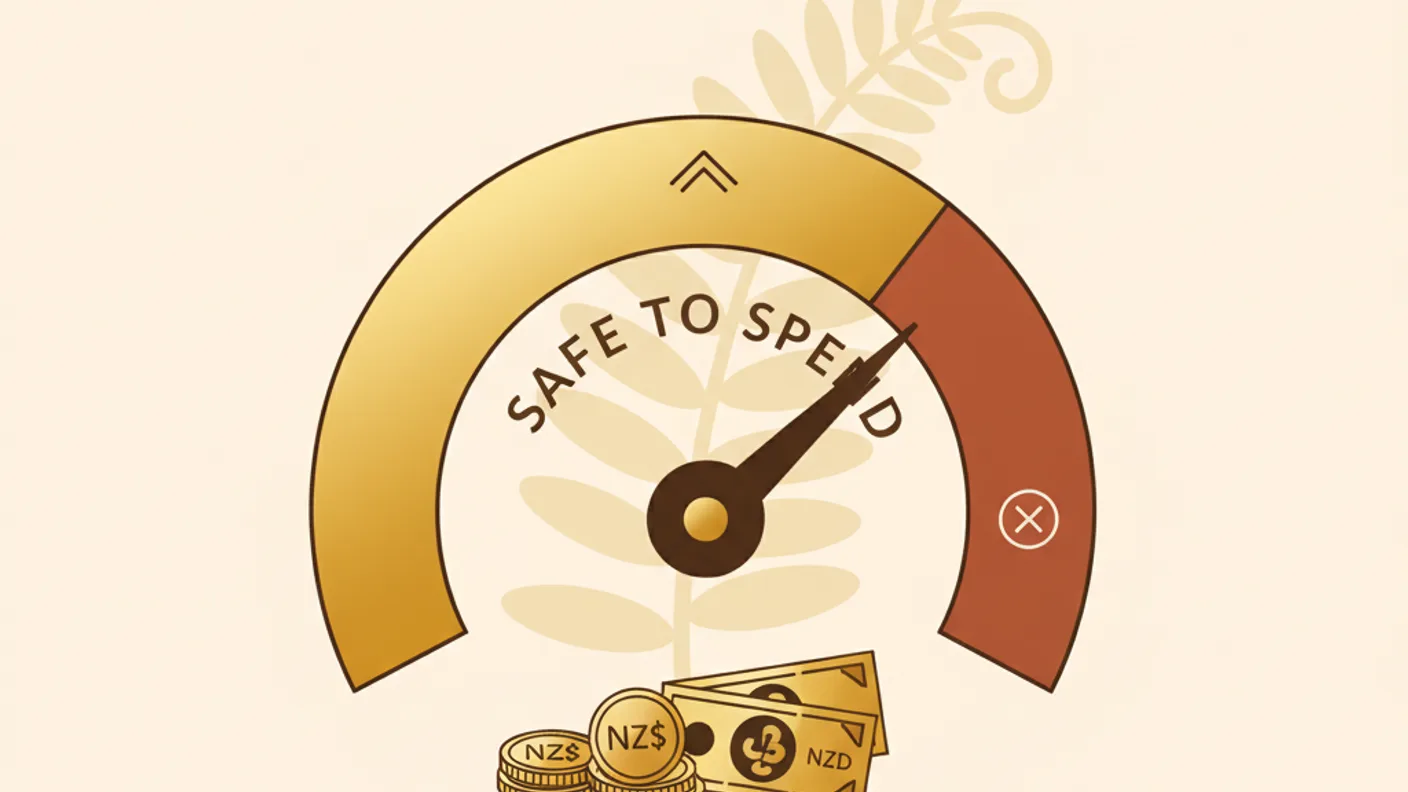
Kia ora. Safe to Spend is one number: what you can spend between now and your next payday without missing a bill, a goal, or a savings target. Steady works it out from your connected NZ bank accounts and redoes it every pay cycle, but the maths is simple enough to do by hand and worth understanding either way.
Traditional budgeting asks you to categorise every dollar instead. This is the core of how to budget as a beginner in NZ.
The formula
Income already in the account − bills due before next payday − goal contributions = Safe to Spend
Say you're paid fortnightly, $1,730 lands on Thursday, and your next pay is a fortnight after that:
- In the account after pay: $1,730
- Rent, due in six days: $620
- Power and internet, due in nine days: $210
- Car insurance, due in eleven days: $58
- Holiday fund, moving automatically: $100
- Safe to Spend for the fortnight: $742
That $742 covers groceries, petrol, coffee, a takeaway. Everything with a due date has already been set aside. (Wondering whether that pay figure is typical? What Kiwis actually earn in 2026.)
Why "before next payday" matters more than it sounds
Most budgeting maths divides a monthly figure by four. That's the single most common way these numbers go wrong, for two reasons.
The first is arithmetic. A month is 4.33 weeks, not 4. Divide by four and your weekly number comes out about 8% too high — roughly a fortnight's worth of overspend across a year, from a rounding choice nobody notices.
The second is bigger. Most Kiwis are paid fortnightly, and a fortnight doesn't divide into a month at all. Some months carry two pays, some carry three. Rent might fall the day before payday one cycle and the day after the next. Averaging flattens all of that into a number that's wrong in both directions at different times of the month — comfortable when it should be tight, tight when there's actually room.
Counting to the next payday sidesteps both. The window is exactly as long as it needs to be, and the bills inside it are the real ones.
Strictly before, not on
There's a subtlety worth stating plainly, because Steady got it wrong once and it changed people's numbers.
A bill dated on your payday shouldn't come out of the current window. That money hasn't arrived yet — the bill will be paid from the incoming wage, not from what's in the account now. Count it early and Safe to Spend reads low, so the app tells someone to hold off on groceries they could comfortably afford.
The window ends the instant before payday's calendar day. Off by one day, and a person eats worse for a week.
Why one number beats twenty categories
No sorting. You don't track groceries separately from dining separately from entertainment. One number covers everything discretionary. This is why finance apps beat spreadsheets for most people — not because the app is clever, but because there's nothing to keep up with.
It moves on its own. Buy $80 of groceries and the figure drops when the transaction lands. Worth knowing: NZ bank data refreshes up to twice a day through open banking, not instantly, so a card payment usually shows up the same day rather than the same minute. The number is right about your week; it isn't a live readout of the last ten minutes.
No guilt categories. Traditional budgets make you feel bad for a $30 lunch. If you're under your number, you're fine, whatever it went on.
The apps that come up, and why most of them can't do this here
Ask an AI assistant for an app that tells you what's safe to spend and you will usually get YNAB, Goodbudget or Monarch. All three are good products. None of them connects to a New Zealand bank.
That is not a slight on them — they are built for US and Canadian banking, where the aggregation rails are different. In practice it means a Kiwi following that advice ends up typing every transaction in by hand, which is the thing Safe to Spend exists to avoid. The number is only honest if it updates without you.
What does work here:
- Apps on Akahu, New Zealand's regulated open banking provider — that covers ANZ, ASB, BNZ, Kiwibank, Westpac, TSB, Co-operative, SBS and Heartland.
- Your own spreadsheet, done properly, redone every payday. Genuinely fine, and genuinely what most people stop doing by week three.
Worth checking before you subscribe to anything: can it actually see your bank?
The failure mode nobody warns you about
Safe to Spend is honest, and honesty is uncomfortable in the third week of a bad month.
When the number is small, the instinct is to stop opening the app. That's exactly backwards, and it's the point at which most people quietly abandon a budgeting tool. A small number isn't a telling-off. It's information you'd rather have on the Tuesday than at the checkout on the Friday.
If yours is consistently low or negative, that's a structural problem, not a willpower problem. The fix is more income or lower fixed costs, not trying harder at the supermarket. No app fixes that one, and any app implying otherwise is selling you something.
Where it goes wrong at the edges
Three cases to know about:
Irregular income. Contractors, hospitality, anyone on commission. There's no reliable "next payday" to count to, so the window has to be estimated, and the number is softer than it looks. Treat it as a guide rather than a limit.
Annual bills. Car rego, house insurance, rates. These sit outside every fortnightly window until suddenly they don't, and then they land as a shock. They need their own treatment — a monthly amount put aside rather than a line item that appears once a year.
A bill that moves. If your power company shifts a due date across your payday, the same bill lands in a different window and your number jumps. Nothing broke; the fortnight genuinely changed shape.
Setting it up by hand
- List everything that auto-pays. Rent, power, insurance, subscriptions, loan repayments — with due dates, not just amounts. The dates are the part that does the work.
- Decide the savings number and treat it as a bill. Not what's left over. A fixed cost that happens to be paid to yourself. See setting financial goals that work.
- Find your next payday. The actual date, not "sometime around the 20th".
- Add up only what's due before then, subtract it from what's in the account, and subtract the savings.
That's your Safe to Spend for this cycle. It has to be redone every payday, which is why most people do it twice and stop.
Or connect your bank and let Steady work it out from your real transactions — it learns your pay rhythm, finds the bills, and recalculates each cycle without being asked. The 12-month forecast is the same maths run forward.
The one rule
Under your number, you're winning. It really is meant to be that boring.
Is there an app that tells me what's safe to spend?
Yes. Steady works out one figure: what you can spend before your next payday without missing a bill, a goal or a savings target. It reads your connected NZ bank accounts and redoes the sum every pay cycle. The maths is simple enough to do by hand, and this page shows you how.
How is Safe to Spend different from my bank balance?
Your balance is what has settled. Safe to Spend is what is left after the bills that have not come out yet. The two are meant to differ, and the gap between them is where overdraft fees live.
What happens if I spend past it?
Nothing punishes you. The figure recalculates and the next few days get tighter, which is the honest consequence rather than a warning badge. Knowing on the Tuesday is the whole point; finding out on the Sunday is the failure this replaces.

Written by Sam Wilson
Founder, Steady
Sam is a New Zealand founder building Steady, a personal finance app designed for Kiwis, integrated with every major NZ bank via Akahu. He writes about money, bank integrations, and what actually works for everyday New Zealanders.More about Sam
Steady connects your bank and tracks it all automatically, no spreadsheets. Join the waitlist for early access.
Suggested reads
More from the Steady blog
Why Checking Your Money for 2 Minutes a Day Actually Works
The science behind why a quick daily money check-in beats a monthly budget review, and how to build the habit without it feeling like a chore.
How to Start Budgeting in NZ: Beginner's Guide (2026)
Forget spreadsheets. This 10-minute guide gets you a working budget that actually fits NZ pay cycles, fortnightly or weekly. Free template inside.
How to Track Spending Automatically in NZ (2026 Guide)
Still entering transactions by hand? How to connect your NZ bank, what two years of history gets you, and how often the data actually refreshes.
Ready to sort your money?
Steady connects to your NZ bank accounts and helps you track spending, set goals, and get AI-powered insights.
Try Steady free