How to Pay Off Credit Card Debt in NZ (2026 Step-by-Step)
NZ credit card interest sits at 19–25% APR, the most expensive debt most Kiwis carry. A realistic 3-step playbook to clear it: balance transfer, avalanche or snowball, then automate so it never comes back.
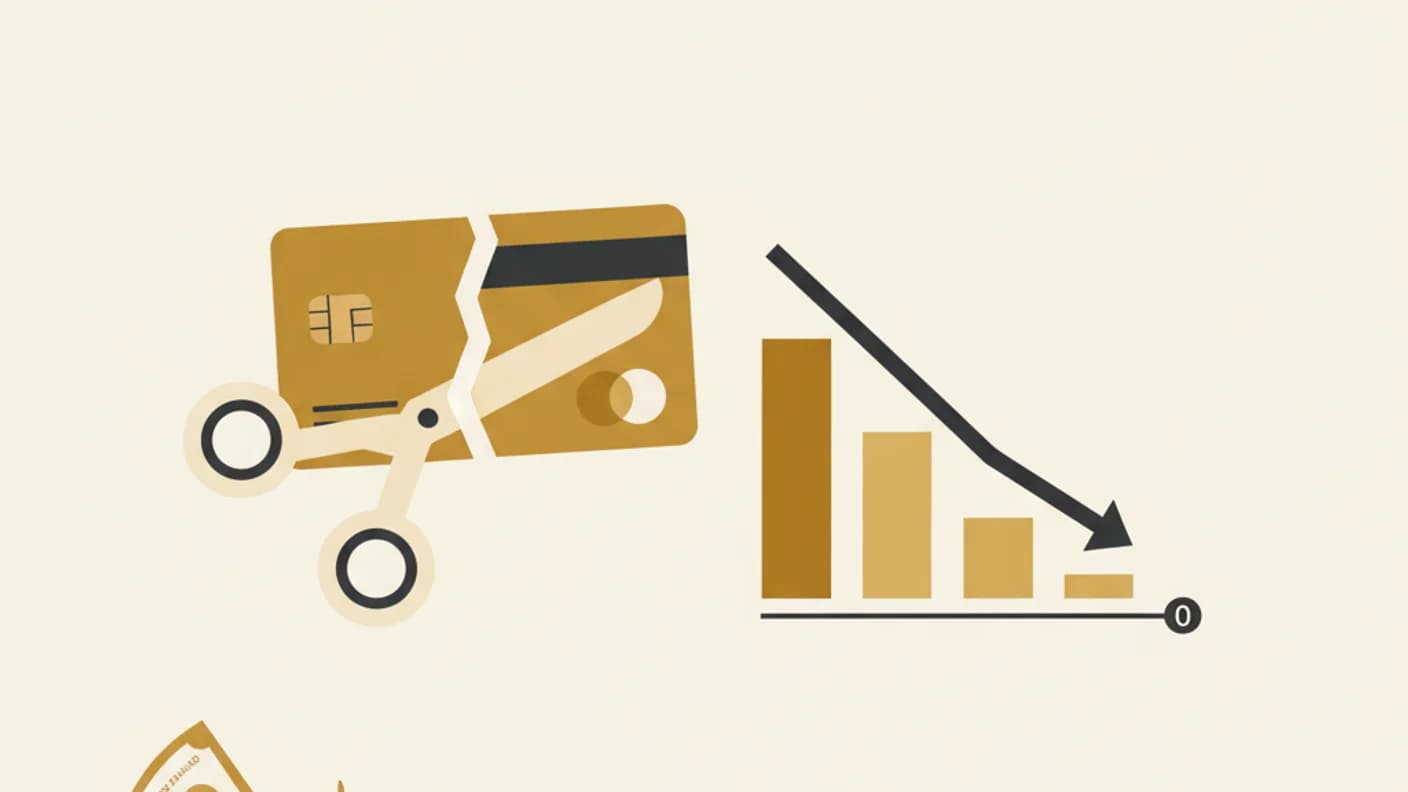
The short version
- Before you pay anything down, you need to make sure the balance stops growing.
- Two methods work. Pick the one you'll actually stick to.
- Most NZ banks offer 0% balance-transfer cards for 6–18 months.
Credit card debt in New Zealand is one of the most expensive forms of debt you can carry. ANZ, ASB, BNZ, Kiwibank and Westpac all sit between 19% and 25% APR on purchases in 2026 — which is why it goes first if you are working out the order to clear several debts, the kind of rate that turns a $3,000 balance into $4,500+ over two years if you only pay the minimum.
The good news: it's also one of the easiest debts to fix, because the maths is simple and the levers are well-known. Here's how to do it without a debt-consolidation loan or a YouTube finance guru.
Disclaimer: General education only, not personalised financial advice. If you're in serious debt stress, call MoneyTalks on 0800 345 123, it's free, anonymous, and run by qualified NZ financial mentors.
Step 1: Stop the bleeding
Before you pay anything down, you need to make sure the balance stops growing.
- Freeze the card. Most NZ banks let you temporarily lock the card from the mobile app. Do this today. You can unlock it for genuine emergencies.
- Cancel auto-renewing subscriptions routed through the card. Move recurring bills onto your everyday debit account. A subscription audit is worth an hour of your time.
- Make at least the minimum payment on time, every month. Missed payments add default fees and damage your credit score.
Step 2: Pick a payoff strategy
Two methods work. Pick the one you'll actually stick to.
Avalanche (mathematically optimal)
Pay the minimum on every card. Throw every extra dollar at the highest-interest card. When that one's clear, roll the payment into the next-highest. This saves you the most interest over the life of the debt.
Snowball (psychologically easier)
Pay the minimum on every card. Throw every extra dollar at the smallest balance. When that's clear, roll into the next-smallest. You'll pay slightly more interest, but the early wins keep momentum up.
For most Kiwis with 1–3 cards, the difference between the two is a few hundred dollars over a couple of years, small enough that the right answer is "whichever one you'll keep doing."
Step 3: Consider a balance transfer
Most NZ banks offer 0% balance-transfer cards for 6–18 months. ASB, Westpac and BNZ all run these promotions periodically in 2026. The mechanic:
- Open a new card at a competing bank that offers 0% on transferred balances.
- Transfer your existing balance across.
- Pay it down aggressively during the 0% period, every dollar goes to principal, not interest.
Watch the fine print: there's usually a 1–3% transfer fee, and the 0% rate snaps to 19%+ at the end of the promo. Set a calendar reminder for the cliff date and aim to clear the balance before it.
Step 4: Automate the new normal
Once the cards are clear, the goal is to never carry a balance again. The fix:
- Set the credit card to auto-pay the full statement balance on the due date. This kills interest charges entirely. Every NZ bank supports this.
- Use the card like a debit card. Spend within your safe-to-spend amount for the month. If you can't pay it off, don't put it on the card.
- Track your total card balance automatically. Apps like Steady connect via Akahu and show your card balance alongside your other accounts, so you see the running total, not a surprise statement at month-end.
The maths: why this works
A $5,000 balance at 22% APR, paying $200/month:
- Minimum payment only (~$100/mo): ~7 years to clear, ~$3,400 in interest.
- $200/mo fixed: ~2.5 years, ~$1,300 in interest.
- $200/mo + 12-month 0% balance transfer: ~22 months, ~$400 in interest.
The same $200/month becomes a fundamentally different outcome depending on the interest rate it's fighting against.
Common NZ mistakes
Closing the card the day it hits zero. Don't. Closing a long-held card can drop your credit score (it shortens your credit history and shrinks total available credit). Keep it open, freeze it, use it once a quarter on a small auto-paid subscription.
Treating "available credit" as savings. Available credit is a loan offer, not money. Your real cash position is your bank balance minus your card balance.
Consolidating into a personal loan you don't need. Personal loans for debt consolidation can help if your interest rate drops and you commit to not running the cards back up. If either of those isn't true, you're just adding a new debt on top.
When to get help
If your minimum payments are more than 20% of your take-home pay, or you're using one card to pay another, that's a sign you need outside help, not a sign of failure. MoneyTalks (0800 345 123) is the free NZ service. They're not pushy, they're not selling anything, and they've helped thousands of Kiwis restructure debt with banks directly.
The bottom line
Credit card debt feels like a willpower problem. It's actually an interest-rate problem. Lower the rate (balance transfer), raise the payment (avalanche/snowball), and automate the new state (auto-pay full balance), and the maths does the work.
Most Kiwis who use this 3-step approach clear $5,000–$10,000 of card debt within 18–24 months without taking on a new loan.
Steady tip: Connect your credit cards via Akahu and Steady shows your total card balance alongside your everyday accounts, so the number stays visible instead of waiting for a monthly statement.

Written by Sam Wilson
Founder, Steady
Sam is a New Zealand founder building Steady, a personal finance app designed for Kiwis, integrated with every major NZ bank via Akahu. He writes about money, bank integrations, and what actually works for everyday New Zealanders.More about Sam
Steady connects your bank and tracks it all automatically, no spreadsheets. Join the waitlist for early access.
Suggested reads
More from the Steady blog

Emergency Fund in NZ: How Much Do You Need? (2026)
68% of Kiwis couldn't cover a $1,000 emergency. Here's exactly how much YOUR emergency fund should be, and the fastest way to build it. Updated April 2026.
How to Automate Your Finances in NZ (Set and Forget)
Set it up once, never think about it again. This NZ automation guide puts your savings, bills, and tracking on autopilot in under 30 minutes.
How to Start Budgeting in NZ: Beginner's Guide (2026)
Forget spreadsheets. This 10-minute guide gets you a working budget that actually fits NZ pay cycles, fortnightly or weekly. Free template inside.
Ready to sort your money?
Steady connects to your NZ bank accounts and helps you track spending, set goals, and get AI-powered insights.
Try Steady free